
What Label Information Must Cat Food Brands Prepare?
Oct. 23, 2026
Share:
What Label Information Must Cat Food Brands Prepare? Cat food brands must prepare accurate, readable, and legally compliant information that tells consumers what the product is, who made it, what ingredients it contains, how much is inside, and how it should be fed and stored. For a Private Label Cat Food business, this information is not only a regulatory requirement—it is a commercial asset that supports consumer trust, retailer approval, product traceability, and successful market entry. Xinji Biotechnology can help brands coordinate formula development, packaging artwork, ingredient documentation, and label compliance before production.
Label rules differ by destination market. In the United States, cat food labeling is generally connected to the U.S. Food and Drug Administration (FDA), state feed-control authorities, and the Association of American Feed Control Officials (AAFCO) Model Regulations. In the European Union, brands must consider Regulation (EC) No. 767/2009, FEDIAF nutritional guidance, and local-language requirements. Therefore, the correct answer to What Label Information Must Cat Food Brands Prepare? depends on the target country, product category, formula, and claims.
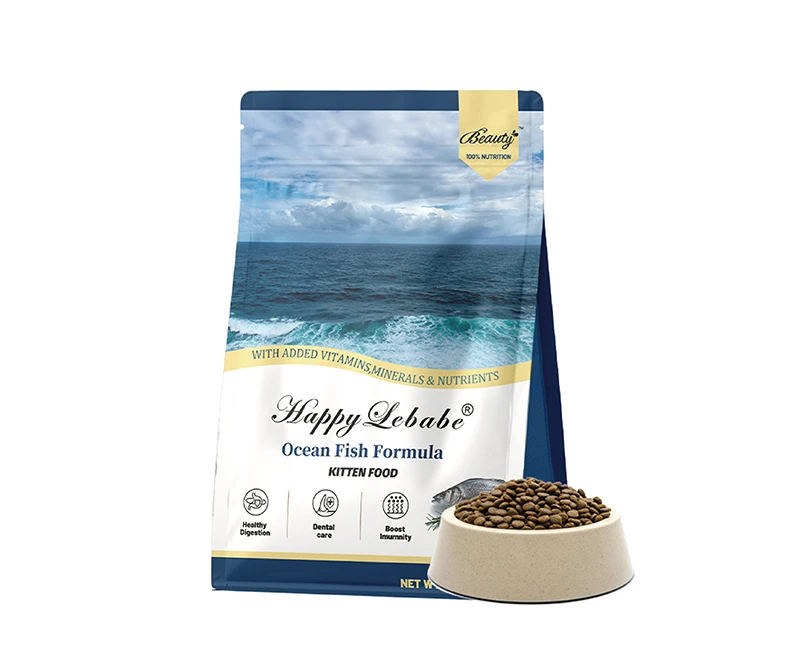
Pet food labeling developed from a basic product-identification function into a structured compliance and marketing system. As the pet food industry expanded, regulators introduced requirements for ingredient declaration, nutritional adequacy, feeding directions, net quantity, manufacturer identification, and safety information.
Today, a cat food label serves several purposes at the same time:
For brands using contract manufacturing or Private Label Cat Food production, the label is also the visible connection between the brand owner and the manufacturing facility. A well-controlled label reduces the risk of customs delays, marketplace rejection, product relabeling, or costly packaging disposal.
Although exact requirements vary by jurisdiction, most cat food brands should prepare the following label components before final artwork approval.
The front panel should clearly identify the product. Examples include:
The product name must not create a misleading impression. For example, a product called “Chicken Dinner” may be subject to different compositional or naming rules than one called “Chicken-Flavored Cat Food.” A prominent ingredient image or statement should also reflect the actual formula and manufacturing specification.
The package must display the net weight or net volume using the measurement system required in the target market. For example, U.S. packaging commonly uses ounces and pounds, while many other markets use grams and kilograms.
Net quantity controls should be connected to the filling and packaging process. A brand may set an internal target such as 100% weight verification during initial production validation, followed by documented in-process checks. Tolerances must be established according to local metrology and packaging regulations rather than selected arbitrarily.
Ingredients are normally listed in descending order by weight as formulated or added, depending on the applicable regulation. The ingredient statement should use accepted ingredient names and avoid unsupported descriptions.
Brands should verify:
A common mistake is changing an ingredient percentage during procurement without updating the label. Even a seemingly minor substitution can affect the ingredient order, nutritional analysis, claim substantiation, and legal conformity.
Many markets require a declared nutritional analysis. In the United States, cat food labels commonly include guaranteed analysis values such as:
Additional declarations may be needed depending on the formula and claim, including ash, calcium, phosphorus, taurine, or specific vitamins. In the European market, labels often use the term “analytical constituents.” The declared values should be supported by laboratory testing and should match the product specification.
Testing laboratories may use validated methods referenced by organizations such as AOAC International. Brands should also define sampling plans and acceptance criteria. For packaging quality, ASTM D5276 may be used for drop testing of filled shipping containers, while ASTM D4169 can support distribution-performance testing. These ASTM standards do not replace nutritional or feed-label regulations; they help verify packaging durability and logistics performance.
A nutritional adequacy statement explains whether the product is intended to be complete and balanced for a particular life stage. Common life-stage categories include:
In the United States, a “complete and balanced” claim generally requires compliance with the relevant AAFCO nutrient profile or completion of an appropriate feeding protocol, where applicable. In Europe, the product should align with relevant FEDIAF nutritional guidance and local legal requirements.
Brands should never use “complete and balanced” merely because a formula contains meat, taurine, or a vitamin premix. The complete nutrient profile, processing method, feeding purpose, and substantiation documents must support the statement.
Feeding instructions should be practical and appropriate for the product’s moisture level, calorie density, life stage, and intended use. A feeding guide may include:
Feeding directions must be calculated from the actual formula rather than copied from another product. A high-moisture wet food and a concentrated dry kibble cannot use the same daily feeding table.
The label should identify the legally responsible business entity. Depending on the market, this may include:
For imported Private Label Cat Food, the importer or responsible operator may have additional registration, notification, or documentation obligations. Xinji Biotechnology can help coordinate the information flow between the brand owner, factory, packaging supplier, and export documentation team.
Every production batch should be traceable through a lot or batch code. Date marking may include a best-before date, expiration date, or use-by date depending on local rules and product type.
A robust traceability system should connect the label code to:
As a practical quality target, manufacturers may maintain electronic lot traceability within 24 hours of a customer or regulator inquiry. This is an internal service-level objective, not a universal legal requirement.
Storage statements should reflect the product’s validated shelf life and packaging barrier performance. Typical instructions may include:
For wet food, retort pouches, cans, and trays, shelf-life validation should consider thermal processing, seal integrity, water activity, microbiological stability, and packaging performance. Seal testing and accelerated-aging studies should be documented before a long shelf-life claim is printed.
Start by listing every destination country and sales channel. A label for the U.S. market may not satisfy requirements in Germany, Canada, Australia, or the United Kingdom. Confirm language, measurement units, registration requirements, claim restrictions, and responsible-party rules before design begins.
Before artwork approval, freeze the following documents:
The label should be generated from controlled technical data, not from informal sales copy.
Claims such as “high protein,” “natural,” “human-grade,” “organic,” “grain-free,” “hypoallergenic,” and “supports urinary health” may require specific evidence or may be regulated differently by market.
For example, “grain-free” requires the formula and cross-contact controls to support the absence of cereal grains. “Hypoallergenic” is a strong biological claim and should not be used simply because the recipe contains one animal-protein source. Claims should be reviewed by a qualified regulatory specialist before printing.
Use a documented checklist covering text, graphics, units, translations, ingredient order, claims, barcode, lot coding, and contact details. Artwork review should include both technical and native-language proofreading.
A professional packaging quality system may include:
For critical label elements, brands may require 100% inspection through vision systems or documented operator verification. The exact inspection method should be defined in the quality agreement with the manufacturer.
Only one controlled master file should be released to production. The approved version should include a revision number, approval date, market, SKU, packaging format, and responsible approver.
Artwork version control prevents one of the most expensive errors in private-label manufacturing: producing thousands of packages with an outdated ingredient statement or incorrect feeding guide.
The front panel attracts attention, but the back and side panels usually contain the legally significant information. A visually attractive package cannot compensate for an incorrect ingredient list, missing net quantity, or unsupported nutritional claim.
Facility certification and label compliance are related but separate. A factory may operate under HACCP, GMP, ISO 22000, or another food-safety system while the brand owner remains responsible for accurate market-specific claims and artwork.
Marketing terminology is not globally standardized. “Premium” may have no precise legal definition in one market, while “natural,” “organic,” or “veterinary diet” can carry significant regulatory implications in another.
Ingredient percentages, analytical values, and nutritional claims should be calculated from controlled formulation data and verified through testing. Estimation can produce an incorrect ingredient order or make a claim impossible to defend.
ASTM and DIN standards are useful for packaging, mechanical performance, testing methods, and quality-control procedures. They do not replace AAFCO, FDA, FEDIAF, EU, or local feed-labeling requirements. A compliant project uses the correct standard for each risk.
Consider a brand preparing a 400-gram wet cat food pouch for sale in two countries. The initial artwork includes the product name, a chicken image, a guaranteed analysis, and a feeding chart. During technical review, the team identifies several problems:
The brand then updates the ingredient declaration, recalculates feeding directions using product energy density, verifies the nutritional adequacy statement, adds the required responsible-party details, and standardizes date coding. The manufacturer also performs seal-integrity testing and packaging transport trials before mass production.
This process illustrates why What Label Information Must Cat Food Brands Prepare? should be treated as a cross-functional project involving regulatory affairs, nutrition, quality assurance, packaging engineering, marketing, and supply-chain teams.
Xinji Biotechnology can be positioned as a development and manufacturing partner for brands that need coordinated support from product concept to finished packaging. A practical project workflow may include:
Brands should request objective evidence from any supplier, including certificates of analysis, test reports, production records, shelf-life data, and applicable quality-system documentation. A supplier response target such as within 24 hours can improve project communication, but regulatory responsibility should still be assigned clearly in the commercial agreement.
| Label Element | Key Verification Question | Supporting Evidence |
|---|---|---|
| Product identity | Does the product name accurately describe the food? | Formula and product specification |
| Ingredient statement | Are names, order, and additives correct? | Approved formula and supplier documents |
| Guaranteed analysis | Do declared values match the validated product? | Laboratory test report and specification |
| Feeding directions | Are instructions suitable for life stage and energy density? | Nutrition calculation and feeding guidance |
| Claims | Can every claim be substantiated in the target market? | Claim dossier, test data, and regulatory review |
| Traceability | Can the product be linked to its production batch? | Lot code, production record, and distribution record |
| Packaging | Will the package protect the product through distribution? | Seal, leakage, drop, vibration, or transport testing |
What Label Information Must Cat Food Brands Prepare? The essential package includes product identity, ingredient declaration, net quantity, analytical information, nutritional adequacy, feeding directions, responsible-party details, lot coding, date marking, storage instructions, and substantiated claims.
For a successful Private Label Cat Food launch, brands should define the target market first, freeze the formula, verify every claim, complete a documented artwork review, and control the final packaging version. By combining regulatory requirements with quality practices such as ISO/IEC barcode verification, ASTM packaging tests, laboratory analysis, and 100% inspection of critical information, brands can reduce launch risk and strengthen consumer confidence.
If you are planning a new cat food SKU, contact Xinji Biotechnology to discuss formula development, private-label manufacturing, packaging coordination, and the complete label-information preparation process before production begins.
 Related News

Oct. 23, 2026
What Label Information Must Cat Food Brands Prepare?
What Label Information Must Cat Food Brands Prepare? Cat food brands must prepare accurate, readable, and legally compliant information that tells consumers what the product is, who made it, what ingredients it contains, how much is inside, and how it should be fed and stored. For a Private Label Cat Food business, this information is not only a regulatory requirement—it is a commercial asset
View More
Oct. 23, 2026
What Buyers Must Prepare for an OEM Pet Product Project
The pet care market is moving from basic supplies toward functional, branded products that solve clear daily needs. Private Label Pet Products allow retailers, veterinary businesses, groomers, and online sellers to launch products under their own brand without building a factory. A buyer can develop custom private label pet products such as supplements, grooming items, dental care products, toys,
View More
Oct. 16, 2026
Which Pet Food Format Fits Retail, E-commerce, and Subscription Sales?
Choosing the right product format can determine whether a pet food line succeeds on store shelves, survives parcel delivery, or earns repeat subscription orders. In this guide, we at Xinji Biotechnology explain how to match Dry Pet Food, wet food, freeze-dried products, and treats with each sales channel. You will receive a practical step-by-step method for selecting packaging, controlling
View More
Oct. 15, 2026
Private Label vs Custom Pet Food: Key Differences for New Brands
A Private Label Pet Food Manufacturer can help a new brand enter the market quickly, but private label is not always the best choice for every product strategy. Custom pet food may provide stronger differentiation, while private label usually offers faster development, lower initial risk, and simpler purchasing. New founders need to compare more than the product price before choosing a
View More
Oct. 15, 2026
How to Avoid Confusing Treats With Complete and Balanced Pet Food
Many pet owners buy attractive dog treats or cat snacks and assume they can replace a daily meal. The safer approach is to check the label for a nutritional adequacy statement, compare calories, and use treats as a controlled supplement. This guide explains how to tell if pet food is complete and balanced, how many treats should a dog eat, and can treats replace pet food in real household
View More
Oct. 15, 2026
Choosing Protein Sources for a Private Label Cat Food Line
Choosing the right protein source is one of the most important decisions when developing Private Label Cat Food. The protein affects nutritional value, digestibility, palatability, product cost, supply stability, claims, and the way customers perceive the brand.
View More
Oct. 12, 2026
How Should Buyers Set Pet Food Batch Acceptance Criteria?
For pet food importers and private label brands, batch acceptance criteria should be agreed upon before production, covering product specifications, sampling methods, laboratory testing, traceability, and procedures for handling nonconforming goods.
View More
Oct. 10, 2026
Tablets vs. Powders: Which Pet Supplement Format Should Buyers Choose?
For pet brands and distributors choosing a private label supplement, the appropriate format depends on the intended use, active ingredients, target animal, dose size, stability requirements, and customer preferences.
View More
Oct. 09, 2026
How Should Buyers Verify Pet Treat Shelf Life?
For pet treat importers and private label brands, shelf life should be established through product-specific stability evidence, suitable packaging, and defined quality acceptance criteria rather than a supplier's standard date declaration alone.
View More
Oct. 08, 2026
What Specs Should Buyers Set for Private Label Dog Food?
For brands sourcing private label dog food, the right specifications depend on the target dog's life stage, feeding habits, distribution channel, and storage conditions. Before placing an order, buyers should define kibble diameter, moisture limits, guaranteed nutritional analysis, package weight, and shelf-life requirements in a written product specification.
View MoreRelated Product
The company adheres to the policy of "quality, innovation" and the purpose of "reputation". On the basis of mutual benefit, we are willing to sincerely cooperate with people from all walks of life at home and abroad, and strive to seek greater win-win development!


