
Kibble vs Canned Food: Which Format Is Easier to Scale?
Nov. 10, 2026
Share:
Choosing between kibble and canned food becomes a production decision as soon as orders move beyond a small batch. Teams comparing kibble vs canned food for scaling pet food production, searching for how to scale Dry Pet Food manufacturing, or evaluating the best pet food format for contract manufacturing must weigh extrusion, retort sterilization, and moisture content. The practical measures are water activity, thermal processing, and palatability—not simply whether a product looks premium on a shelf.
A recipe that works for 500 kilograms may create different problems at 50 metric tons. A dry formula can encounter die wear, dust, coating limitations, or warehouse congestion. A wet formula can require cans or pouches, retort capacity, cooling space, and stricter control of container integrity. The format that is easier to scale is therefore the one that matches the company’s equipment, target market, cash flow, quality system, and distribution model.
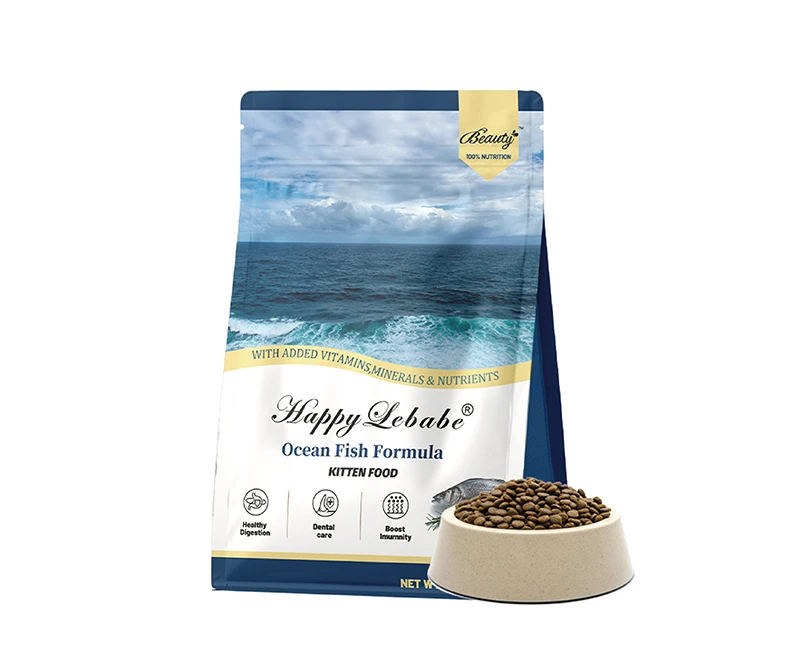
For most new pet food brands, kibble has the simpler scaling path because one continuous process can convert a mixed recipe into a shelf-stable product. The common sequence is ingredient receiving, grinding, batching, mixing, extrusion, drying, cooling, fat or flavor coating, screening, and packaging. Once the process is stable, increasing output often involves longer run time, additional shifts, or a larger extruder rather than adding a separate sterilization stage.
Industrial extruders vary widely, but commercial lines can produce hundreds of kilograms per hour, while larger systems can reach several metric tons per hour depending on recipe density, die design, moisture, and product size. These figures are capacity ranges rather than guarantees. A high-protein formula, large dental shape, or recipe containing fibrous ingredients may run more slowly than a standard small kibble.
Kibble commonly contains about 8% to 12% moisture, while canned food commonly contains approximately 70% to 85% moisture. The exact value depends on the recipe and product specification, but the commercial consequence is consistent: wet food transports a much larger quantity of water.
For example, a 10-kilogram shipment at 10% moisture contains roughly 9 kilograms of dry matter. A 10-kilogram shipment at 78% moisture contains roughly 2.2 kilograms of dry matter. The wet shipment still has nutritional value, but freight, pallet space, and warehouse handling are calculated on the full product weight. This difference can influence contribution margin when a brand sells through distributors or ships across long distances.
Kibble can be packed in bags, cartons, or flexible pouches after cooling and quality checks. Canned food must also pass filling, seaming, retorting, cooling, drying, coding, case packing, and container inspection. Each stage adds equipment, labor, maintenance, and opportunities for delay.
Dry packaging is not risk-free. Oxygen transmission, seal strength, bag punctures, oil migration, and moisture pickup can shorten shelf life. However, a packaging failure normally affects product protection and freshness rather than creating the same type of food-safety hazard associated with an underprocessed sealed wet-food container.
Canned food is more complex to scale, but complexity does not make it commercially inferior. Wet food can provide high palatability, a soft texture, and significant water intake through the meal. These characteristics may be valuable for cats, senior pets, animals with dental limitations, or owners who prefer mixed feeding.
A successful wet-food operation treats the retort as a core production asset rather than an afterthought. The product must be filled to a controlled weight, sealed correctly, and heated according to a validated schedule. The process must achieve commercial sterility, which means the product has been processed to control microorganisms capable of growing under normal unrefrigerated storage conditions. It does not mean that every microorganism has been eliminated.
Retort performance depends on container size, product viscosity, initial temperature, filling level, formulation, and heating method. A dense loaf in a large can may heat more slowly at its cold spot than a thin gravy product in a small pouch. Because of this, a manufacturer should not copy a time-and-temperature schedule from another recipe without process validation.
Validation commonly involves temperature measurement at the slowest-heating location, confirmation of the required lethality, and monitoring of routine production conditions. The specific target is determined by the product and applicable regulations, but a useful technical concept is the F0 value, which expresses equivalent lethality at a reference temperature. A qualified process authority should establish the schedule for the actual product and package.
A wet-food line must control seam dimensions for metal cans or seal integrity for pouches. Small changes in flange, overlap, wrinkle formation, or seal contamination can compromise the package. Manufacturers also need checks for swollen cans, leaking pouches, damaged closures, and abnormal cooling water conditions.
After processing, cans and pouches require drying and careful handling. Wet products are heavier, so pallets can reach higher gross weights even when the number of selling units is similar. Warehouses must also manage pallet stability, corrosion risk, temperature exposure, and stock rotation. These controls add cost, but they are manageable when the plant has trained operators and documented procedures.
| Cost or operating factor | Kibble | Canned food | Scaling implication |
|---|---|---|---|
| Primary process | Grinding, mixing, extrusion, drying, coating | Mixing, filling, sealing, retorting, cooling | Wet food adds more equipment and validation stages. |
| Typical moisture range | About 8%–12% | About 70%–85% | Wet food generally costs more to transport per unit of dry matter. |
| Main quality risks | Moisture migration, oxidation, mold growth, poor extrusion | Underprocessing, seal failure, swelling, leakage | Both need preventive controls, but the hazards differ. |
| Packaging investment | Bags or pouches and form-fill-seal equipment | Cans or pouches, fillers, seamers or sealers, retort systems | Wet food usually has a higher fixed-equipment threshold. |
| Distribution profile | Lower weight and compact storage | Higher water weight and pallet load | Dry products are often easier to ship nationally or internationally. |
Ingredient costs can reverse the apparent advantage. A kibble formula may require meat meals, starch sources, functional fibers, fats, vitamins, and minerals, while a wet recipe may use more fresh or frozen animal ingredients. Commodity prices, minimum order quantities, yield loss, packaging format, and co-packer fees should be modeled together instead of comparing ingredient prices alone.
Energy use also varies by plant design. Kibble needs energy to evaporate water after extrusion, while canned food needs energy for heating and cooling during retort processing. A dry line may recover heat efficiently, and a wet line may have efficient steam generation. Without utility data from the specific factory, it is not credible to claim that one format always consumes less energy.
Dry food is shelf-stable because its low moisture and controlled water activity limit microbial growth. Water activity is not the same as moisture percentage: it measures how much water is available for chemical reactions and microbial activity. A product can have an acceptable moisture result but still show stability problems if water is unevenly distributed or the packaging admits humidity.
Oxidation is another major concern, especially in formulas containing unsaturated animal fats or fish oils. It can create rancid odors and reduce palatability. Practical controls include antioxidant selection, controlled fat application, low-oxygen packaging, appropriate storage temperature, and testing such as peroxide value or secondary oxidation measurements. The acceptable limits should be set for the formula and validated shelf-life period.
These controls matter because a recipe can meet its nutrient target while failing in texture or storage. A small change in starch gelatinization, dryer residence time, or coating temperature may alter hardness, breakage, odor, and consumer acceptance.
Wet food generally depends on sealed packaging and validated heat processing for unrefrigerated stability. The formula’s pH, viscosity, particle size, solids content, and package geometry all influence heat penetration. A product with lower acidity typically requires a more carefully controlled thermal process than an acidified product, and the exact requirement must be established for the finished formulation.
Palatability can be strong, but texture consistency may be difficult when the recipe contains meat chunks, liver, gums, starches, or gravy. Ingredient variability can change viscosity and filling accuracy. During scale-up, the manufacturer should measure net weight, drained weight when relevant, viscosity, pH, package vacuum, seam or seal characteristics, and product appearance.
One common mistake is to focus on recipe development while delaying package selection. A pouch, tray, and metal can do not heat in the same way. Selecting the container early allows the formulation, fill weight, retort cycle, labeling, and logistics plan to develop as one system.
For a brand with limited capital, dry food is often easier to launch through a qualified contract manufacturer because established extrusion and bagging capacity is widely available. The brand can begin with one or two formulas, test demand, and increase purchase orders as sales become more predictable.
Canned food may be sensible when the brand’s core promise depends on high moisture, loaf texture, broth, toppers, or single-serve convenience. It can also work when the business already has dependable access to a wet-food co-packer, suitable packaging suppliers, and enough working capital to manage longer production and inventory cycles.
Neither format removes the need for regulatory compliance. The finished product must meet the applicable rules for ingredients, labeling, nutritional adequacy, manufacturing, and claims in each market where it is sold. A “complete and balanced” claim, for example, should be supported by the relevant nutritional standard and feeding or formulation evidence rather than marketing language alone.
Xinji Biotechnology can be considered when a brand needs help connecting formula development, process planning, equipment selection, and production execution. The useful question is not simply whether a supplier can make kibble or canned food. It is whether the supplier can document batch records, ingredient controls, in-process testing, packaging specifications, traceability, and corrective-action procedures.
Before committing to a production partner, request clear answers to the following:
A supplier that provides answers with measured specifications is more useful than one that only promises “high quality” or “fast delivery.” Ask for sample certificates, a production-flow description, and a scale-up plan that identifies the expected bottleneck.
For pet owners, the better format depends on the animal’s nutritional needs, dental condition, appetite, medical status, feeding routine, and household budget. Kibble is convenient, energy-dense, simple to portion, and usually easier to store after opening. Canned food provides more moisture and may be easier for some pets to eat, but an opened container normally requires refrigeration and should be handled according to the label and veterinary guidance.
Dry food does not clean teeth reliably unless it is specifically designed and supported by appropriate evidence; ordinary kibble should not be treated as a substitute for veterinary dental care. Likewise, canned food is not automatically more nutritious. Nutritional adequacy depends on the complete formulation, feeding amount, manufacturing controls, and the pet’s individual requirements.
For manufacturers, the purchase decision should be based on landed cost and operational risk. Calculate ingredient cost, packaging, conversion fees, utilities, labor, testing, freight, warehouse space, expected yield, damaged-unit rate, and inventory financing. A format with a lower factory price can become less profitable if it requires expensive packaging, slow turnover, or high freight cost.
Choose kibble first when the business needs lower shipping weight, longer warehouse reach, multiple bag sizes, continuous production, and a comparatively straightforward contract-manufacturing route. Choose canned food when moisture delivery, soft texture, premium meal presentation, or a wet-food positioning is central to the product—and when validated retort and package capacity are already available.
The most reliable approach is staged testing. Start with a pilot formula, confirm palatability and nutrient specifications, run a controlled production trial, measure yield and quality losses, and then compare the full landed cost against the expected selling price. Only after those results are stable should the company commit to larger packaging orders or a dedicated production slot.
In the end, kibble vs canned food for scaling pet food production favors dry food for many logistics-led brands, while how to scale dry pet food manufacturing still requires disciplined extrusion, drying, coating, and stability controls. The best pet food format for contract manufacturing is the one supported by suitable extrusion or retort sterilization capacity, controlled moisture content, validated water activity, documented thermal processing, and measured palatability. Xinji Biotechnology can be evaluated as part of that supplier review, provided the final decision is based on verifiable specifications, trial results, and total landed cost rather than adjectives.
 Related News

Nov. 10, 2026
Kibble vs Canned Food: Which Format Is Easier to Scale?
Choosing between kibble and canned food becomes a production decision as soon as orders move beyond a small batch. Teams comparing kibble vs canned food for scaling pet food production, searching for how to scale dry pet food manufacturing, or evaluating the best pet food format for contract manufacturing must weigh extrusion, retort sterilization, and moisture content. The practical measures are
View More
Nov. 09, 2026
Cost Drivers in Private Label and Custom Pet Food Production
Private label pet food buyers often ask why two similar products have very different quotes. The answer usually comes from private label pet food, custom formulation, and contract manufacturing costs. Ingredient quality, recipe complexity, minimum order quantity, packaging, testing, and freight can change the final price by a large amount.
View More
Nov. 06, 2026
How to Match Treat Types to Training, Dental, and Reward Use
Choosing the right treat is not simply a matter of flavor or package size. With Xinji Biotechnology, I use a practical matching system based on treat function, texture, calorie density, dog size, and usage frequency. In this guide, I will show you How to Match Treat Types to Training, Dental, and Reward Use step by step, so your team can select safer products, improve customer satisfaction, and
View More
Nov. 05, 2026
How Palatability Testing Improves Acceptance of New Cat Food
A nutritionally complete cat food can still fail if cats refuse to eat it. This is the central commercial problem behind many unsuccessful launches: manufacturers optimize protein levels, texture, aroma, packaging, and cost, yet overlook the animal’s immediate sensory response. Cats are highly selective feeders, and a small change in fat coating, meat hydrolysate, kibble hardness, moisture, or
View More
Nov. 04, 2026
Dry vs Wet Pet Food: Shelf Life, Shipping, and Cost Compared
When a dog owner compares dry vs wet pet food shelf life, the decision is rarely about texture alone. A camping trip can expose the limits of best pet food for shipping, while a multi-pet household may focus on cost per calorie pet food rather than the price printed on the bag or can. The practical details include kibble, canned pet food, and moisture content, as well as professional measures
View More
Nov. 03, 2026
When to Start With a Proven Formula Instead of Custom R&D
When should a brand use a proven formula instead of custom pet food R&D? In most cases, a private label pet food manufacturer is the safer starting point when you need a launch-ready product, predictable palatability, documented traceability, and a defined shelf life without funding a full custom formulation program. Custom R&D becomes more appropriate when your target animal, ingredient system,
View More
Nov. 02, 2026
Baked, Air-Dried, and Freeze-Dried Pet Treats Compared
Choosing between baked dog treats for sensitive stomachs, air-dried cat treats without preservatives, and freeze-dried pet treats for training becomes difficult when a label gives only vague promises. A puppy may vomit after a rich snack, a cat may reject a chewy treat, or a family may buy a large bag that loses its texture before it is finished. This comparison examines moisture content, water
View More
Oct. 30, 2026
How Cat Nutritional Needs Shape Private Label Formula Development
Private label cat food formulation starts with the cat, not the package. A viable product must meet the nutritional requirements for cats, remain a complete and balanced cat food, and fit a defined use case such as indoor weight management, kitten growth, or urinary-support positioning. For a retailer working with a custom cat food manufacturer, the practical questions are usually the same: Which
View More
Oct. 29, 2026
A Practical Checklist for Choosing an OEM or ODM Supplier
Private Label Pet Products buyers rarely need another general supplier directory. They need a reliable way to compare factories, control product quality, protect margins, reduce launch risk, and confirm that an OEM or ODM partner can support the business after the first order. Xinji Biotechnology understands that supplier selection affects every stage of a pet product launch, from product
View More
Oct. 28, 2026
Inventory Rotation Practices for Bulk Dry Pet Food Orders
Inventory rotation practices for bulk dry pet food orders help distributors, retailers, shelters, breeders, and boarding facilities prevent stale stock, reduce write-offs, and maintain product safety. The most reliable system combines bulk dry pet food inventory management, FIFO inventory, FEFO for dry pet food warehouses, lot traceability, moisture control, and safety stock planning. When a
View MoreRelated Product
The company adheres to the policy of "quality, innovation" and the purpose of "reputation". On the basis of mutual benefit, we are willing to sincerely cooperate with people from all walks of life at home and abroad, and strive to seek greater win-win development!


