
How Should Buyers Verify Pet Treat Shelf Life?
Oct. 09, 2026
Share:
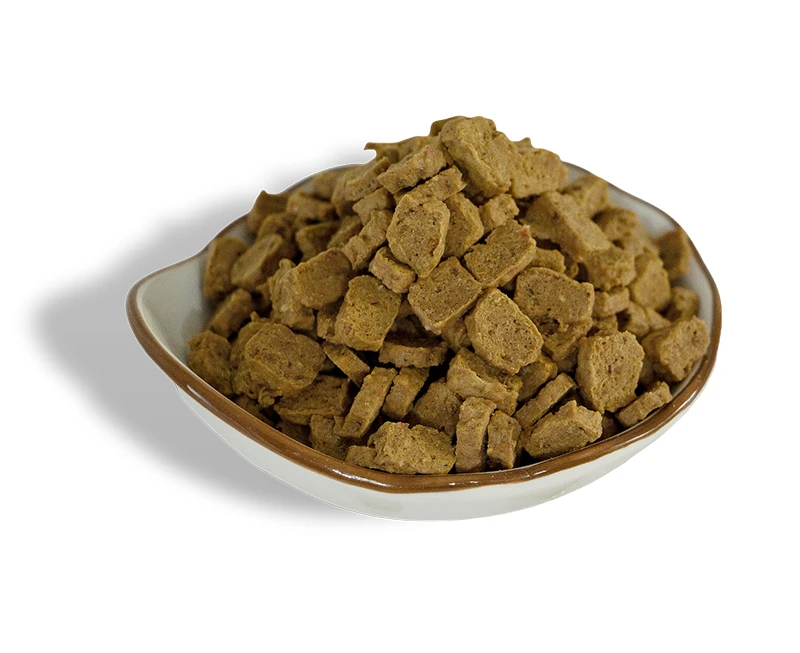
For pet treat importers and private label brands, shelf life should be established through product-specific stability evidence, suitable packaging, and defined quality acceptance criteria rather than a supplier's standard date declaration alone. Products with higher fat content or oxidation-sensitive ingredients may require closer monitoring of rancidity, while moisture-sensitive treats need appropriate moisture and microbiological controls. Buyers evaluating Xinji Biotechnology's pet snack products, including fish granules for dogs and cats, should also review the company's manufacturing and quality-control background and request the stability information relevant to the exact formula and packaging being purchased.
Shelf life affects product safety, freshness, inventory turnover, retail returns, and the time available for distribution. A product may pass its initial quality inspection but deteriorate during months of storage if its formulation, processing, packaging, or distribution conditions are unsuitable.
The main challenge is that different pet treats deteriorate in different ways. Fat-containing products may develop oxidative off-odors, moist treats may require stronger microbiological controls, and dry treats may absorb moisture or lose their intended texture.
A shelf-life claim should therefore be linked to the product's actual risks rather than copied from a similar product.
| Product characteristic | Main risk to evaluate | Useful evidence to request |
|---|---|---|
| High-fat or oil-coated treats | Lipid oxidation and rancid odor | Oxidation testing and stability records |
| Moist or semi-moist treats | Microbial growth and changes in texture | Microbiological assessment and moisture-control data |
| Dry biscuits or crunchy snacks | Moisture uptake, loss of crispness, or breakage | Moisture, water activity where relevant, and packaging assessment |
| Fish-based treats | Oxidation and ingredient-specific quality changes | Raw-material controls and relevant oxidation indicators |
| Products containing sensitive nutrients | Decline in selected nutrient levels | Nutrient stability data where claims depend on retention |
| Treats with multiple ingredients | Ingredient interactions and inconsistent deterioration | Formula-specific stability assessment |
These are screening categories, not universal predictions. The actual risk depends on ingredient quality, formulation, processing conditions, packaging, and storage.
Buyers should ask the supplier to explain which quality attributes are expected to change first and how those changes are monitored during the proposed shelf-life period.
A useful specification identifies the properties that must remain acceptable throughout the intended storage period. The exact parameters depend on the product's composition and the risks identified during development.
For products containing susceptible fats or oils, peroxide value can help assess primary lipid oxidation. However, peroxide value alone does not describe every stage of oxidation because primary oxidation products can subsequently break down.
Depending on the formulation, a supplier or qualified laboratory may recommend additional measurements, such as secondary oxidation indicators, sensory evaluation, or other validated methods.
Buyers should ask:
Which oxidation tests are appropriate for this formula?
What are the baseline results at release?
Which limits apply during the proposed shelf life?
Are the test methods suitable for the product matrix?
What action is required if a result exceeds the approved limit?
There is no single peroxide-value threshold that should automatically be applied to every pet treat. The acceptance criteria must be justified for the specific product and aligned with applicable requirements.
Moisture percentage indicates how much water a product contains, while water activity provides information about the availability of water for chemical and microbial processes. These measurements are related but are not interchangeable.
For dry treats, changes in moisture may affect texture and storage performance. For products with greater moisture availability, microbiological controls may be especially important.
A practical purchasing specification should define the relevant test methods, target values, acceptance limits, and testing frequency. Buyers should avoid assuming that a low moisture percentage alone proves microbiological safety or guarantees a long shelf life.
Packaging can slow deterioration, but the appropriate material depends on the product and its storage conditions. Oxygen-sensitive formulations may benefit from effective oxygen barriers, while moisture-sensitive products require suitable moisture protection and reliable seals.
| Packaging option | Potential application | Main limitation to assess |
|---|---|---|
| High-barrier flexible pouch | Treats sensitive to oxygen or moisture | Barrier performance and seal integrity must be verified |
| Standard laminated pouch | Products with moderate protection requirements | Performance depends on the actual laminate structure |
| Resealable pouch | Products intended for repeated household use | Resealing does not eliminate oxygen or moisture exposure |
| Bulk liner inside an outer bag | Distributor or food-service formats | Liner protection and handling damage require assessment |
| Rigid container | Selected products requiring physical protection | Cost, storage volume, and closure performance |
Packaging names alone are not sufficient technical specifications. Request the material structure, relevant barrier data, sealing requirements, and evidence that the selected package is compatible with the product.
A product shipped internationally may experience temperature changes, prolonged storage, repeated handling, and different warehouse conditions. Packaging that performs adequately in a controlled factory environment may not provide sufficient protection under the actual distribution scenario.
Before approving the package, buyers should clarify:
The intended storage temperature and humidity range.
The expected transportation and distribution duration.
Whether the product will be exposed to direct sunlight or elevated temperatures.
The required seal-integrity and package-damage acceptance criteria.
Whether the product will be sold in single-use or resealable packaging.
Where relevant, transport simulation and packaging integrity tests can help identify weak points before commercial shipment.
The study design should reflect the proposed shelf life, product risk, and available evidence. Real-time stability testing under defined storage conditions is important because it observes the product under the conditions for which the shelf-life claim is intended.
Accelerated studies may help identify potential deterioration more quickly, but they should not automatically be treated as equivalent to real-time evidence. Elevated temperatures can change oxidation, moisture migration, or other processes in ways that do not perfectly reproduce normal storage.
A suitable study plan may include:
Initial testing at product release.
Testing at predefined intervals during storage.
Assessment of relevant microbiological and chemical parameters.
Sensory or physical checks where appropriate.
Packaging integrity evaluation.
Documentation of storage conditions and deviations.
For example, a product intended for a long distribution period should have a study plan that supports the proposed period and the expected storage conditions. The number and timing of test points should be determined by the product's risks rather than an arbitrary universal schedule.
Buyers should also ask whether the stability data apply to the exact formula and packaging being quoted. Changing fat sources, preservatives, processing conditions, or packaging materials may require reassessment.
A shelf-life failure can lead to complaints, returns, inventory write-offs, or regulatory concerns. The purchasing agreement should define how failures are investigated and how responsibilities are allocated.
| Failure scenario | Investigation focus | Procurement response |
|---|---|---|
| Rancid or unusual odor | Fat quality, oxidation, storage temperature, and package integrity | Hold affected stock and request a documented investigation |
| Unexpected moisture increase | Seal failure, storage humidity, and material barrier performance | Assess the affected lot and identify the source of moisture exposure |
| Microbiological failure | Raw materials, process controls, contamination, and storage | Follow the applicable product-safety and recall procedures |
| Broken or crushed treats | Product fragility, packing method, and transport handling | Compare damage rates with agreed acceptance criteria |
| Nutrient claim no longer supported | Formula stability and analytical results | Review the claim and product release requirements |
The response should be proportional to the risk. A potential safety issue requires immediate containment and appropriate regulatory action where applicable, while a minor appearance issue may require a different corrective process.
A clear agreement should cover notification deadlines, retained samples, laboratory responsibilities, access to production records, replacement or refund terms, and the method for closing corrective actions.
A longer stated shelf life does not automatically indicate a better product. One supplier may have stronger stability evidence, while another may quote a different formula, package, or storage condition.
Compare suppliers using the same technical brief.
| Comparison item | Supplier A | Supplier B |
|---|---|---|
| Formula and fat sources | Record the approved specification | Record the approved specification |
| Proposed shelf life | Confirm the stated period and basis | Confirm the stated period and basis |
| Stability evidence | Review methods, intervals, and results | Review methods, intervals, and results |
| Packaging | Compare material and barrier data | Compare material and barrier data |
| Release testing | Compare actual tests and acceptance criteria | Compare actual tests and acceptance criteria |
| Storage conditions | Confirm the recommended range | Confirm the recommended range |
| Commercial terms | Include MOQ, price, and lead time | Include MOQ, price, and lead time |
The comparison should use the total commercial cost, including the expected cost of packaging, shipping, testing, and potential product losses. A low factory price can become less attractive if the product has inadequate protection for the planned distribution route.
No. Shelf life depends on the formula, manufacturing process, packaging, and storage conditions. Buyers should request evidence supporting the proposed period for the exact product being purchased.
Not necessarily. Vacuum packaging may reduce oxygen exposure, but it does not correct every source of deterioration or eliminate microbiological risks. Its suitability must be evaluated against the product's moisture characteristics, safety requirements, and packaging integrity.
The appropriate release-testing plan depends on product risk, applicable requirements, and the manufacturer's validated quality system. Buyers should define which parameters require routine batch testing and which can be monitored through a justified periodic stability program.
Yes. A new film structure, seal design, package size, or closure may change oxygen or moisture exposure. Ask the supplier whether the existing stability evidence remains applicable or whether additional validation is needed.
Request the product specification, relevant stability evidence, packaging information, release-testing plan, recommended storage conditions, and batch traceability arrangements. For a new product, approve a representative sample and establish written acceptance criteria before scaling up.
Pet treat shelf life should be supported by evidence that reflects the actual formulation, packaging, and distribution conditions. Buyers should focus on the relevant deterioration mechanisms, define measurable release criteria, and establish a corrective-action process before the first commercial order.
For product specifications, packaging discussions, and a project quotation, contact Xinji Biotechnology at xinjipet_123@163.com. Include the intended treat type, target market, package format, forecast quantity, and required shelf-life period so the inquiry can be evaluated against the appropriate technical requirements.
 Related News

Oct. 12, 2026
How Should Buyers Set Pet Food Batch Acceptance Criteria?
For pet food importers and private label brands, batch acceptance criteria should be agreed upon before production, covering product specifications, sampling methods, laboratory testing, traceability, and procedures for handling nonconforming goods.
View More
Oct. 10, 2026
Tablets vs. Powders: Which Pet Supplement Format Should Buyers Choose?
For pet brands and distributors choosing a private label supplement, the appropriate format depends on the intended use, active ingredients, target animal, dose size, stability requirements, and customer preferences.
View More
Oct. 09, 2026
How Should Buyers Verify Pet Treat Shelf Life?
For pet treat importers and private label brands, shelf life should be established through product-specific stability evidence, suitable packaging, and defined quality acceptance criteria rather than a supplier's standard date declaration alone.
View More
Oct. 08, 2026
What Specs Should Buyers Set for Private Label Dog Food?
For brands sourcing private label dog food, the right specifications depend on the target dog's life stage, feeding habits, distribution channel, and storage conditions. Before placing an order, buyers should define kibble diameter, moisture limits, guaranteed nutritional analysis, package weight, and shelf-life requirements in a written product specification.
View More
Oct. 12, 2026
Packaging Choices That Create a Consistent Pet Brand Portfolio
Private Label Pet Products often lose shelf impact when every pouch, jar, and carton uses a different color, logo position, or information order. A clear packaging system can help a growing pet brand look unified across food, treats, supplements, and accessories while still making each product easy to recognize. This guide explains how to build consistent packaging for private label pet products,
View More
Oct. 09, 2026
How Intellectual Property Differs in OEM and ODM Partnerships
When purchasing teams source Private Label Pet Products, the lowest quotation is rarely the only concern. Buyers must also determine who owns the product design, technical drawings, formulas, packaging, tooling, test data, trademarks, and improvements created during development. The answer is different in an OEM partnership than in an ODM partnership.
View More
Oct. 09, 2026
Best Temperature and Humidity Conditions for Storing Dry Pet Food
Finding the best temperature for storing dry pet food, the ideal humidity for keeping kibble fresh, and learning how to store dry pet food after opening can prevent stale odors, mold growth, nutrient loss, and unnecessary waste. For most households, a stable room temperature of 10–25°C (50–77°F) and relative humidity below 60% provide a practical target. The key science involves water
View More
Sep. 29, 2026
You should choose the supplement format by the animal you are selling to and how the active ingredient behaves, not by which format is cheapest to make: soft chews win on palatability for daily use, hard chews suit long-shelf-life dental or joint lines, oral liquid fits precise dosing for cats and sick animals, and nutrient paste is the practical choice for weaning, recovery, and syringe feeding. If you are launching one SKU, start with soft chews for dogs and add the other formats only when a specific use case demands them.
View More
Sep. 29, 2026
What to Check Before You Choose an OEM Partner for Private-Label Pet Supplements or Food?
You should shortlist an OEM partner by certificates and quality control first, then by customization depth, because a supplier without veterinary GMP and export documentation cannot ship your brand legally no matter how low the price.
View More
Sep. 17, 2026
How Should Brands Develop Private Label Pet Treats?
Private label pet treats allow brands and distributors to build differentiated dog and cat product lines without developing an entirely new manufacturing infrastructure.
View MoreRelated Product
The company adheres to the policy of "quality, innovation" and the purpose of "reputation". On the basis of mutual benefit, we are willing to sincerely cooperate with people from all walks of life at home and abroad, and strive to seek greater win-win development!


