
Private Label Cat Food formulation starts with the cat, not the package. A viable product must meet the nutritional requirements for cats, remain a complete and balanced cat food, and fit a defined use case such as indoor weight management, kitten growth, or urinary-support positioning. For a retailer working with a custom cat food manufacturer, the practical questions are usually the same: Which nutrients are mandatory? How should wet and dry recipes be compared on a dry-matter basis? How can taurine, arachidonic acid, metabolizable energy, palatability, safety, and label compliance be verified before launch? The answer is a documented process that links feline physiology to formula design, testing, production, and post-launch feedback.
That process also protects against common commercial failures. A food can look premium yet miss its target calorie density; a high-meat recipe can become unbalanced after cooking; and a formula marketed for urinary health may make claims that are not supported by feeding data. Xinji Biotechnology can be evaluated as a development partner by the same objective criteria: nutrient specifications, raw-material controls, process validation, laboratory results, and traceable corrective actions.
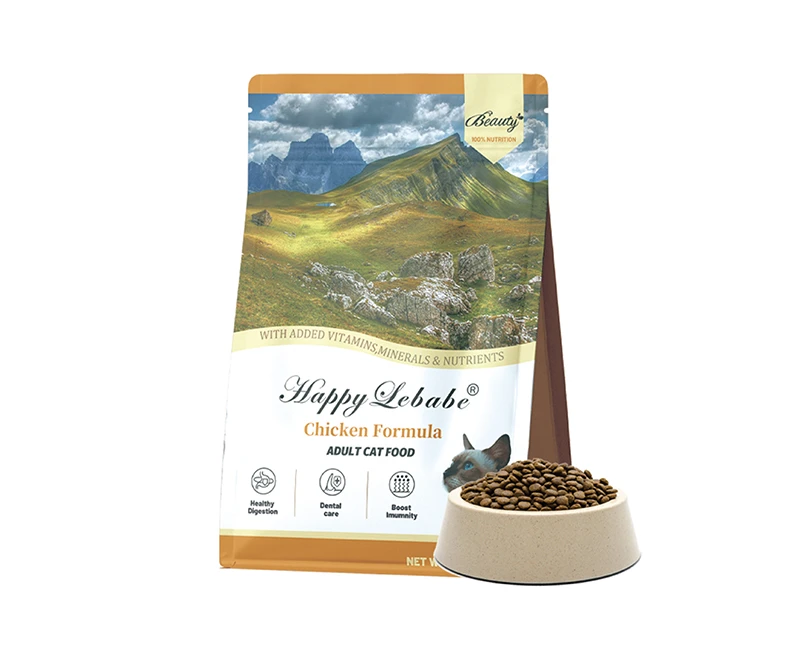
Cats are obligate carnivores, but “high meat” is not a complete nutritional specification. A commercial recipe must deliver protein, essential amino acids, fat, fatty acids, minerals, vitamins, energy, and adequate moisture in the correct proportions. The formulation target changes according to life stage, body condition, feeding format, and intended claim.
Why Private Label Cat Food Must Begin With a Nutritional Use Case
- Indoor and sterilized cats: lower activity can reduce energy needs, but indiscriminate protein or fat reduction may damage palatability and nutrient density.
- Kittens: growth requires a different nutrient profile from adult maintenance, including appropriate calcium, phosphorus, energy, and essential fatty acid supply.
- Wet-food buyers: high moisture reduces nutrient concentration per kilogram of product, so the formula must be evaluated on a dry-matter and calorie basis.
- Older cats: age alone does not define one universal diet. Kidney disease, dental limitations, obesity, and muscle loss require different strategies.
- Sensitive-cat households: owners may expect limited-ingredient or novel-protein products to reduce digestive problems, but “sensitive” is not automatically a legally recognized disease claim.
The commercial brief should therefore state the intended life stage, feeding format, target calorie density, expected daily ration, protein and fat strategy, acceptable ingredients, excluded ingredients, market regulations, and evidence required for each claim.
Private Label Cat Food Problems Created by Broad Consumer Positioning
Verified Evidence Behind Feline Nutrition Decisions
A well-documented clinical example shows why nutrient chemistry must control marketing language. Pion and colleagues reported feline dilated cardiomyopathy associated with taurine deficiency in Science in 1987. The report described cats with myocardial failure whose cardiac condition improved after taurine supplementation. This was not an advertising anecdote; it was clinical evidence that cats have a species-specific taurine requirement and that formulation mistakes can have serious consequences.
The practical lesson for a private label product is not simply “add taurine.” Taurine stability can be affected by processing, moisture, storage, and the overall formula. A developer should specify a finished-product target, test the lot after processing, and establish a shelf-life margin rather than relying only on the theoretical recipe value.
What the Taurine Case Series Changed in Cat Food Development
The Association for Pet Obesity Prevention reported in its 2018 survey that approximately 59.5% of surveyed U.S. cats were classified as overweight or obese. That figure does not diagnose every individual cat, and it should not be copied as a universal global prevalence rate. It does, however, support a clear product-development need: calorie density, feeding instructions, portion control, and body-condition education deserve as much attention as ingredient storytelling.
For a weight-management formula, the developer should calculate metabolizable energy using a recognized method, verify the result through laboratory analysis or feeding-related validation, and express feeding directions in grams or kilocalories—not only in cups or cans. A 200 g pouch and a 200 g can may contain materially different calories.
Population Evidence: Obesity and Calorie Density
Required Preparation for Private Label Cat Food Formulation
- Current nutrient authority: obtain the applicable AAFCO Official Publication for the target U.S. market, or the current FEDIAF Nutritional Guidelines for European markets. Use the current edition during specification approval because nutrient tables and labeling rules can change.
- Life-stage definition: choose growth, adult maintenance, gestation/lactation, or all-life-stages only when the recipe and evidence support that claim.
- Ingredient documentation: collect supplier specifications, certificates of analysis, allergen statements, country-of-origin records, microbiological limits, oxidation limits, and, where relevant, contaminant testing.
- Formula software or spreadsheet: calculate nutrient contribution on an as-fed basis, dry-matter basis, and per 1,000 kcal. All three views help identify errors between wet and dry products.
- Regulatory checklist: review ingredient legality, guaranteed analysis, calorie statement, feeding directions, net quantity, manufacturer information, lot coding, claims, and language requirements for each sales territory.
Technical and Regulatory Materials
- Calibrated scales suitable for both micro-ingredients and bulk ingredients.
- Moisture analyzer or validated oven-drying method.
- Water-activity meter for shelf-stability assessment.
- pH meter for wet-food process control where pH is relevant.
- Laboratory access for protein, fat, fiber, ash, amino acids, fatty acids, minerals, vitamins, taurine, microbiology, mycotoxins, heavy metals, and oxidation markers.
- Metal detector or X-ray inspection system for packaged products.
- Temperature data loggers for retort, sterilization, drying, warehouse, and transport checks.
- Retention-sample storage with documented temperature and humidity conditions.
Equipment should be calibrated against documented standards. A result without a method, sample identification, laboratory traceability, and acceptance limit is not sufficient evidence for a commercial release decision.
Equipment for Private Label Cat Food Quality Control
Step-by-Step Private Label Cat Food Formula Development
Tool: product brief, market survey, body-condition guidance, regulatory checklist, and competitor label audit.
Action: define one primary consumer problem. Examples include uncontrolled calorie intake in indoor cats, poor acceptance of a therapeutic-style texture, kitten growth, or demand for a poultry-free recipe. Record the intended life stage, feeding format, target market, package size, price range, and claims.
Parameters: specify target moisture, protein, fat, fiber, ash, energy, taurine, calcium, phosphorus, sodium, magnesium, and relevant vitamins and fatty acids. Set ranges rather than a single theoretical number where normal raw-material variation is expected.
Check: confirm that every proposed claim can be supported by the selected regulatory pathway. “Complete and balanced” and “supports urinary tract health” are not interchangeable statements.
Failure fix: if the brief contains several unrelated promises, divide it into separate product concepts. A single formula rarely performs equally well as a kitten food, weight-management food, hairball product, and therapeutic diet.
1. Translate the Consumer Problem Into a Nutritional Specification
Tool: formulation software or a controlled spreadsheet using verified ingredient analyses.
Action: enter each ingredient’s moisture, protein, fat, fiber, ash, amino acids, minerals, vitamins, and energy contribution. Calculate the final recipe as-fed and then convert each nutrient to dry matter:
For example, a food containing 80% moisture has 20% dry matter. An as-fed protein value of 10% equals 50% protein on a dry-matter basis. This conversion prevents misleading comparisons between canned and kibble products.
Parameters: calculate energy per kilogram and per package. Use the applicable AAFCO or FEDIAF nutrient profile and confirm whether the requirement is expressed per dry matter or per 1,000 kcal.
Check: compare the formula against minimums and maximums for the selected life stage. Review calcium-to-phosphorus balance, essential amino acids, taurine, arachidonic acid, vitamin A, vitamin D, copper, iodine, and selenium.
Failure fix: if a nutrient is below target, do not automatically add a premix. First investigate moisture, ingredient analysis, energy assumptions, processing losses, and unit conversions. A spreadsheet error can produce a technically incorrect premix.
2. Build the Formula on an As-Fed and Dry-Matter Basis
Tool: approved-supplier list, ingredient specifications, certificate-of-analysis database, and risk assessment.
Action: evaluate animal proteins, plant ingredients, fats, fibers, binders, palatants, vitamins, minerals, and functional ingredients according to both nutrient contribution and manufacturing behavior.
Parameters: define receiving limits for moisture, protein, peroxide value or other oxidation indicators where applicable, Salmonella absence requirements, total plate count, yeast and mold, mycotoxins, heavy metals, and foreign material. Limits must be set with the responsible food-safety and regulatory teams rather than copied from another product.
Check: verify the supplier’s identity, lot number, test method, sampling plan, and result date. For high-risk ingredients, use independent confirmation testing.
Failure fix: if an ingredient passes paper review but produces inconsistent texture, odor, or nutrient results, place it on conditional approval and investigate supplier variation, storage, particle size, and processing compatibility.
3. Select Ingredients for Nutrition, Safety, and Process Performance
Tool: pilot mixer, grinder, extruder or retort-compatible pilot line, moisture analyzer, pH meter where relevant, and sample coding system.
Action: prepare multiple pilot batches while changing one major variable at a time. For dry food, record grind size, preconditioning moisture, extrusion conditions, dryer temperature profile, final moisture, and coating rate. For wet food, record particle size, fill weight, seal integrity, retort schedule, cooling profile, and container condition.
Parameters: use the process authority’s validated thermal schedule for wet food. Do not treat a generic temperature or time as proof of commercial sterility. For dry food, establish a validated final moisture and water-activity specification suitable for the product and packaging.
Check: compare pilot-batch nutrient results with the theoretical formulation, inspect texture and appearance, measure package weight, and perform seal or closure checks.
Failure fix: if the product crumbles, separates, or has excessive odor, examine particle size, fat addition point, starch gelatinization, emulsification, drying, and packaging oxygen exposure before changing the entire formula.
4. Prototype the Private Label Cat Food Formula
5. Verify Nutrients in the Finished Product
Tool: accredited or otherwise qualified laboratory, approved analytical methods, controlled sampling plan, and retained samples.
Action: test representative finished-product samples—not only raw materials. The panel should match the product risk profile and regulatory claim. Common tests include moisture, crude protein, crude fat, crude fiber, ash, taurine, amino acids, fatty acids, calcium, phosphorus, magnesium, sodium, vitamins, energy, microbiology, mycotoxins, heavy metals, and oxidation indicators.
Parameters: compare results to the approved formula tolerance, the applicable nutrient profile, guaranteed-analysis declarations, and internal release limits. Use dry-matter and calorie-based interpretation where required.
Check: reconcile laboratory results with production batch records and premix addition records. Review whether the sample was taken from the beginning, middle, and end of the run when homogeneity is a concern.
Failure fix: quarantine the lot if a critical nutrient or microbiological result fails. Conduct root-cause analysis covering weighing, mixing time, ingredient identity, laboratory method, sampling, and process losses. Release only through documented disposition.
6. Conduct Palatability and Feeding Validation
Tool: independent animal-care facility, blinded test design, feeding records, veterinary oversight, and ethical approval where required.
Action: assess first-choice preference, intake, stool quality, vomiting or intolerance reports, body weight, and general acceptance. A palatability result should not be presented as a nutritional adequacy result.
Parameters: if an AAFCO nutritional adequacy claim is planned, follow the current applicable AAFCO feeding-protocol requirements. Adult-maintenance protocols commonly involve a 26-week period, but the current official protocol must control the study design, animal numbers, health criteria, and reporting.
Check: verify that cats consumed enough food, maintained acceptable health indicators, and completed the protocol according to the relevant standard. Record refusals and adverse observations rather than reporting only average intake.
Failure fix: if acceptance is low, test aroma, kibble size, texture, moisture, fat-coating uniformity, and transition instructions. Do not conceal poor acceptance by changing the feeding study endpoint.
7. Complete Shelf-Life and Packaging Verification
Tool: stability chamber or controlled storage area, oxygen and humidity monitoring, package-integrity equipment, and a time-point testing schedule.
Action: store packaged samples under intended and stress conditions. Test at release and at defined intervals for nutrient retention, rancidity, moisture migration, water activity, microbial status, package seal integrity, color, odor, and texture.
Parameters: establish product-specific acceptance limits. A water activity value below 0.60 is commonly used as a microbiological control point for many low-moisture foods, but it is not a universal shelf-life guarantee for every pet food. Retort products require validated commercial-sterility controls, while dry foods require moisture and oxygen management.
Check: confirm that the declared shelf life is supported by results at the end of the proposed period, including critical nutrients such as taurine and oxidation-sensitive fats.
Failure fix: if oxidation rises or texture changes, examine antioxidant system, fat quality, oxygen transmission rate, headspace, seal integrity, storage temperature, and package barrier properties.
8. Approve Labels and Launch Controls
Tool: regulatory review checklist, final artwork, batch-release form, complaint-management procedure, and traceability system.
Action: verify product name, species, life stage, net quantity, ingredient list, guaranteed analysis, calorie statement, feeding directions, adequacy statement, manufacturer or distributor information, lot code, and best-before date.
Parameters: use the correct local labeling rules. AAFCO model regulations influence U.S. pet-food labeling, while FEDIAF guidance is widely used in Europe; neither should be substituted for the law in the specific sales territory.
Check: perform a final formula-to-label reconciliation. The package should match the tested product, not an earlier pilot formula.
Failure fix: stop printing or shipment if the label contains an unsupported claim, incorrect calorie value, wrong life-stage statement, or ingredient-order error. Correcting artwork is less costly than recalling product.
Common Private Label Cat Food Errors and Solutions
Error 1: Comparing Wet and Dry Food by the Guaranteed Analysis Alone
Problem: 10% protein in a high-moisture can is not nutritionally equivalent to 10% protein in a dry product.
Solution: convert nutrients to dry matter and compare calories per package. Include both as-fed and dry-matter values in internal reviews.
Error 2: Treating “Natural” or “High-Protein” as Proof of Adequacy
Problem: a recipe can contain named meats and still require supplementation for taurine, vitamins, minerals, or essential fatty acids.
Solution: formulate against the applicable nutrient profile and verify the finished product analytically.
Error 3: Using Raw-Material Numbers Instead of Finished-Product Results
Problem: heat, moisture, oxidation, mixing, and storage can change nutrient availability and concentration.
Solution: test representative finished lots and retain samples through shelf life.
Error 4: Adding Functional Ingredients Without a Defined Dose
Problem: “contains probiotics,” “supports joints,” or “urinary care” does not identify an effective dose, viable count, bioavailability, or clinical endpoint.
Solution: specify the ingredient form, inclusion level, stability target, analytical method, and permitted claim before commercialization.
Error 5: Reducing Calories Without Protecting Daily Nutrient Intake
Problem: a cat eating fewer grams may receive less taurine, vitamins, minerals, and essential amino acids unless the formula is nutrient-dense.
Solution: calculate nutrients per 1,000 kcal and provide measured feeding instructions. Weight-management products should also direct owners to monitor body condition and consult a veterinarian when disease is suspected.
Error 6: Confusing a Commercial Product With a Therapeutic Diet
Problem: kidney disease, diabetes, urinary obstruction, food allergy, and other conditions require veterinary diagnosis and may require controlled therapeutic nutrition.
Solution: keep general wellness claims separate from disease-treatment claims. Obtain veterinary and regulatory review before using disease-related language.
Error 7: Choosing a Manufacturer Only by the Lowest Quotation
Problem: a low unit price cannot compensate for unstable ingredients, weak traceability, inadequate laboratory testing, or high complaint rates.
Solution: audit the manufacturer’s quality system, supplier approval, batch records, calibration program, environmental controls, corrective-action process, and recall capability. When evaluating Xinji Biotechnology or another supplier, request evidence rather than relying on adjectives such as “advanced” or “premium.”
How to Evaluate Xinji Biotechnology for a Private Label Cat Food Project
A useful supplier meeting should produce documents and measurable decisions. Ask Xinji Biotechnology for:
- Available production formats, including dry, wet, freeze-dried, or treat capabilities.
- Minimum order quantity, pilot-batch options, lead times, and packaging constraints.
- Ingredient approval procedures and recent certificates of analysis.
- Testing scope for taurine, amino acids, minerals, vitamins, microbiology, mycotoxins, heavy metals, and oxidation.
- Process controls for extrusion, drying, retort, filling, sealing, and post-process contamination prevention.
- Calibration records for scales, thermometers, moisture analyzers, metal detectors, and other critical devices.
- Lot traceability from finished package back to raw-material lots.
- Complaint, deviation, corrective-action, and recall procedures.
- Evidence supporting the proposed nutritional adequacy statement and any additional claim.
Do not request or publish unverified claims about Xinji Biotechnology’s years of experience, production capacity, certifications, customer count, or test performance. Confirm each statement with a current certificate, audit record, laboratory report, or signed technical document.
Final Recommendations for Private Label Cat Food Buyers
The strongest private label cat food projects connect four elements: a defined feline use case, a formula built against recognized nutrient guidance, finished-product verification, and a manufacturing system that can repeat the result. Start with calorie and life-stage logic, then control taurine, amino acids, minerals, vitamins, fatty acids, moisture, oxidation, microbiology, packaging, and label claims.
Use the 1987 taurine-related feline cardiomyopathy case series as a reminder that species-specific nutrition has clinical consequences. Use current obesity data as a reason to make calorie statements and feeding directions precise. Use dry-matter calculations to compare wet and dry products correctly. Finally, approve Xinji Biotechnology—or any other manufacturing partner—through documented specifications, testing standards, process records, and corrective-action evidence.
For additional technical review, consult the , the , the , and veterinary nutrition professionals before making a final commercial or therapeutic claim.
 Related News


