
Good News | Shijiazhuang Xinji Technology Co., Ltd Officially Passes the Latest Veterinary GMP Acceptance
May. 14, 2026
Share:
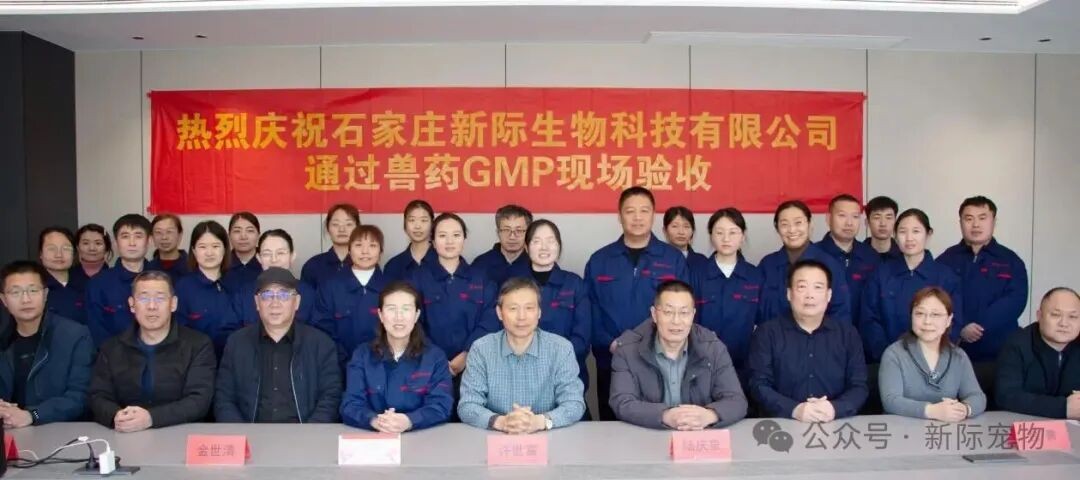
Recently, Shijiazhuang Xinji Technology Co., Ltd has successfully completed the on-site inspection and acceptance of the latest national Veterinary GMP standards. After one year of systematic preparation in strict adherence to high standards and stringent requirements, all seven applied dosage forms have obtained official certification, including eye drops, ear drops, topical ointments, tablets and granules, liquid non-chlorine disinfectants (Grade D Clean Area), and liquid topical insecticides (Grade D Clean Area).
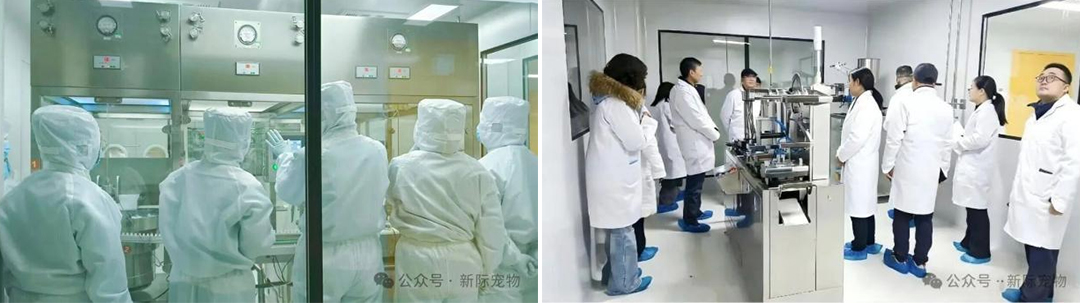
The GMP inspection panel consists of experts from the Ministry of Agriculture and Rural Affairs, Hebei Provincial Department of Agriculture and Rural Affairs, and Hebei Provincial Veterinary Drug Supervision Institute. The panel carried out a thorough on-site inspection covering the company’s production workshops, quality inspection centers and warehousing systems, and conducted practical operation assessments as well as document audits for relevant professional staff.
Upon rigorous evaluation, the expert group unanimously confirmed that Xinji Biotechnology fully complies with the latest Veterinary GMP requirements in terms of plant premises and facilities, production technologies, quality control and management systems. High recognition was specially given to the company’s outstanding performance in risk control for shared production of multiple dosage forms, cleaning validation and data integrity management.
The expert team also commented that the company’s production equipment configuration has reached the domestic industry-leading level, laying a solid foundation for stable and upgraded product quality.
As a modern enterprise focusing on the full industrial chain of companion animal health, Xinji Biotechnology will assume greater social responsibility and boost the high-quality development of China’s pet health industry. Going forward, the company will further deepen strategic cooperation with VaxiAm (USA), Huapu Shijiazhuang Pharmaceutical Co., Ltd., Hebei Provincial Industrial Technology Research Institute of Compound Traditional Chinese Veterinary Medicine Preparations and other institutions. It will continuously optimize its product portfolio and quality management system to deliver superior solutions for all partners.
With the full commissioning and operation of GMP-compliant production lines, Xinji Biotechnology will further scale up its supply capacity of high-quality pet pharmaceuticals, provide solid support for the cause of companion animal health, and drive the standardized and regulated development of the whole industry.
 Related News

Nov. 17, 2026
How to Compare Nutrients on a Dry Matter Basis
Comparing nutrient levels in Dry Pet Food can be misleading when products contain different amounts of moisture. A food with 10 percent protein on an as-fed basis may contain more actual protein than a food with 8 percent protein, but the comparison is not reliable until both products are converted to a dry matter basis.
View More
Nov. 16, 2026
Questions to Ask About MOQ, Lead Time, and Production Capacity
When evaluating a Private Label Pet Food Manufacturer, I recommend using a structured qualification process: first confirm the minimum order quantity (MOQ), then map the complete lead-time schedule, verify production capacity and quality controls, and finally document every commercial term in the quotation and manufacturing agreement. By asking the right Questions to Ask About MOQ, Lead Time, and
View More
Nov. 13, 2026
Palatability vs Potency: Formulation Trade-offs Brands Must Consider
A pet supplement can contain a precisely measured active ingredient and still fail if a dog spits it out or a cat refuses the next dose. That is why brands evaluating palatability vs potency in pet supplements should connect the formulation to real feeding behavior, not only the label claim. This article examines how to improve pet treat acceptance while protecting private label functional pet
View More
Nov. 12, 2026
Comparing Portion Formats for Private Label Wet Cat Food
Choosing between cans, trays, pouches, and cups affects more than shelf appearance. For a brand developing private label wet cat food portion formats, the decision influences the feeding routine, shipping weight, filling line, and retail price. A buyer comparing single-serve wet cat food packaging also needs to assess pâté, chunks in gravy, moisture content, retort sterilization, palatability
View More
Nov. 11, 2026
OEM vs ODM Pet Products: Control, Cost, and Speed Compared
Choosing between an OEM pet products manufacturer, ODM private label pet products, and custom pet products with low MOQ affects more than the logo on a package. It determines your pet supply manufacturing workflow, product development responsibility, and supply chain risk, as well as your MOQ, BOM, NRE, quality-control, and lead-time requirements. A retailer launching a new dog harness may need a
View More
Nov. 10, 2026
Kibble vs Canned Food: Which Format Is Easier to Scale?
Choosing between kibble and canned food becomes a production decision as soon as orders move beyond a small batch. Teams comparing kibble vs canned food for scaling pet food production, searching for how to scale dry pet food manufacturing, or evaluating the best pet food format for contract manufacturing must weigh extrusion, retort sterilization, and moisture content. The practical measures are
View More
Nov. 09, 2026
Cost Drivers in Private Label and Custom Pet Food Production
Private label pet food buyers often ask why two similar products have very different quotes. The answer usually comes from private label pet food, custom formulation, and contract manufacturing costs. Ingredient quality, recipe complexity, minimum order quantity, packaging, testing, and freight can change the final price by a large amount.
View More
Nov. 06, 2026
How to Match Treat Types to Training, Dental, and Reward Use
Choosing the right treat is not simply a matter of flavor or package size. With Xinji Biotechnology, I use a practical matching system based on treat function, texture, calorie density, dog size, and usage frequency. In this guide, I will show you How to Match Treat Types to Training, Dental, and Reward Use step by step, so your team can select safer products, improve customer satisfaction, and
View More
Nov. 05, 2026
How Palatability Testing Improves Acceptance of New Cat Food
A nutritionally complete cat food can still fail if cats refuse to eat it. This is the central commercial problem behind many unsuccessful launches: manufacturers optimize protein levels, texture, aroma, packaging, and cost, yet overlook the animal’s immediate sensory response. Cats are highly selective feeders, and a small change in fat coating, meat hydrolysate, kibble hardness, moisture, or
View More
Nov. 04, 2026
Dry vs Wet Pet Food: Shelf Life, Shipping, and Cost Compared
When a dog owner compares dry vs wet pet food shelf life, the decision is rarely about texture alone. A camping trip can expose the limits of best pet food for shipping, while a multi-pet household may focus on cost per calorie pet food rather than the price printed on the bag or can. The practical details include kibble, canned pet food, and moisture content, as well as professional measures
View MoreRelated Product
The company adheres to the policy of "quality, innovation" and the purpose of "reputation". On the basis of mutual benefit, we are willing to sincerely cooperate with people from all walks of life at home and abroad, and strive to seek greater win-win development!


