
Dry vs Wet Cat Food: Manufacturing and Logistics Differences
Nov. 19, 2026
Share:
Choosing between dry and wet cat food becomes complicated when a cat refuses a new texture, gains weight, or leaves half a can unrefrigerated. The practical answer depends not only on nutrition, but also on private label dry cat food manufacturing, a reliable private label wet cat food supplier, and dry vs wet cat food logistics costs. Moisture content, extrusion, and retort sterilization shape the product long before it reaches a household. For retailers, breeders, and cat owners, understanding water activity, bulk density, and thermal processing makes it easier to compare shelf life, transport risk, feeding value, and total cost instead of relying on claims such as “premium” or “high quality.”
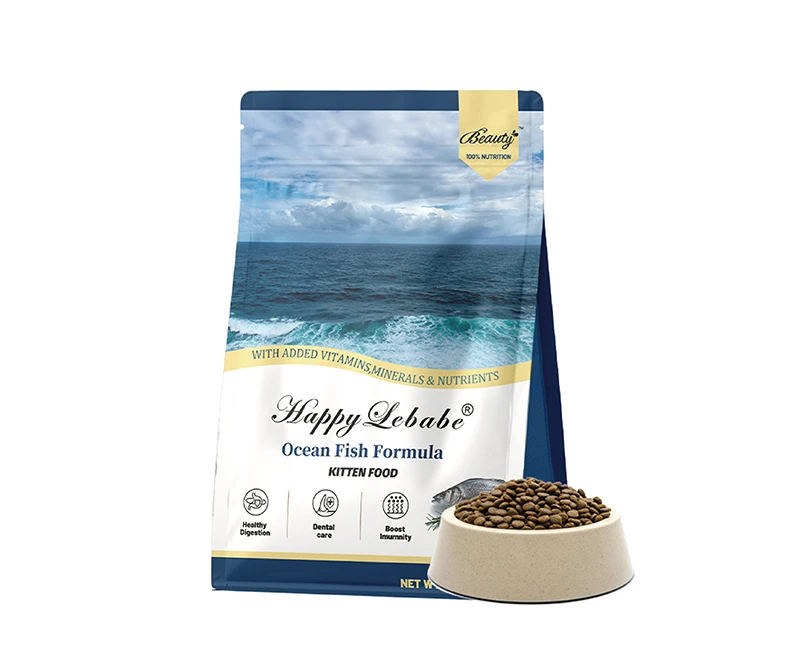
Dry and wet cat food may use similar ingredients—animal proteins, fats, vitamins, minerals, and functional additives—but the manufacturing route is substantially different. A dry product is engineered to become a stable, low-moisture kibble. A wet product is engineered to retain water while remaining microbiologically safe inside a sealed package.
Most dry cat food is produced through extrusion. Ingredients are milled, blended, and combined with water or steam. The mixture is then pushed through a heated die under pressure. The sudden pressure drop at the die exit expands the cooked mass, creating the porous structure of a kibble. Knives cut the expanded rope into controlled pieces, after which the pieces are dried and cooled.
Commercial dry foods commonly contain about 6% to 12% moisture, although the exact specification depends on the formula and local labeling rules. Drying reduces water activity, which limits the ability of many bacteria and fungi to multiply. Manufacturers then apply liquid fat, flavor coatings, or heat-sensitive nutrients after extrusion. The final product is packed in bags, pouches, or cartons with a moisture and oxygen barrier.
Bulk density matters during this stage. A lower-density kibble occupies more warehouse volume for the same mass, while a denser kibble can reduce pallet space but may deliver fewer pieces per cup. For a private-label buyer, the specification should include kibble diameter, moisture target, bulk density, water activity, fat-coating rate, and acceptable breakage percentage rather than only a flavor name.
Wet cat food normally contains approximately 70% to 85% moisture. Ingredients are ground or diced, mixed with water, broth, fats, vitamins, minerals, and thickening agents, then filled into cans, trays, or retort pouches. The container is sealed before commercial sterilization.
Retort processing uses controlled heat and pressure to destroy organisms that could grow in a sealed, oxygen-limited package. The required schedule depends on the product’s acidity, density, particle size, container dimensions, and heat penetration. Because the food is not identical to every other canned recipe, a responsible manufacturer validates the process rather than applying one fixed heating time to all products.
Wet food therefore requires closer control of seam integrity, pouch seals, fill weight, headspace, internal temperature, and cooling water quality. A weak seal can create a spoilage risk even when the recipe itself is nutritionally complete. After sterilization, each batch should be checked for package swelling, leakage, underweight units, and sensory changes.
The largest nutritional difference is water. A dry food containing 10% moisture has approximately 90% dry matter, while a wet food containing 78% moisture has approximately 22% dry matter. Comparing protein percentages directly from the package can therefore be misleading.
For example, a dry food labeled at 35% crude protein and 10% moisture provides approximately:
35 ÷ 90 × 100 = 38.9% protein on a dry-matter basis.
A wet food labeled at 10% crude protein and 78% moisture provides approximately:
10 ÷ 22 × 100 = 45.5% protein on a dry-matter basis.
This calculation does not prove that one product is nutritionally superior. It shows why moisture must be removed mathematically before comparing nutrient percentages. Calories, taurine, phosphorus, fat, and fiber also need to be reviewed in relation to the cat’s health status and the food’s intended life stage.
Wet food can help increase dietary water intake because a 100-gram portion at 78% moisture supplies roughly 78 grams of water. A 100-gram portion of dry food at 10% moisture supplies about 10 grams. This difference may be useful for cats that drink little, but it does not replace veterinary care for urinary, kidney, diabetic, or other medical conditions.
Dry food is more energy-dense by weight because less space is occupied by water. A typical dry diet may provide roughly 3.5 to 4.5 kilocalories per gram, while many wet foods provide roughly 0.7 to 1.3 kilocalories per gram. Actual energy density must come from the manufacturer’s formulation and laboratory or calculated metabolizable-energy data. Feeding by volume alone can cause errors when switching between formats.
A complete review should begin with the nutritional adequacy statement, not the front-of-pack photograph. The buyer should verify the target life stage, guaranteed analysis, calorie content, ingredient declaration, lot coding, feeding instructions, and compliance with the applicable market’s pet-food regulations.
For production approval, useful tests include moisture, crude protein, crude fat, crude fiber, ash, taurine, selected minerals, peroxide value for fat oxidation, water activity for dry products, and microbiological screening. Wet products also require container-integrity checks and validated thermal-process records. No single test proves overall quality, but a documented testing plan reduces the chance that a formula passes visual inspection while missing a critical specification.
Xinji Biotechnology can be evaluated as a manufacturing partner by requesting its formula specifications, sample test reports, minimum order quantity, packaging options, batch-traceability process, and procedures for handling deviations. A buyer should confirm whether the quoted product is manufactured to an existing recipe or developed as a custom private-label formula.
The manufacturing difference continues after packaging. Dry kibble usually has a lower shipping weight per feeding calorie, while wet food carries substantial water and uses heavier, more protective packaging. That affects pallet configuration, freight cost, warehouse design, and damage exposure.
Consider a simplified shipment containing 10,000 kilograms of finished food. If the dry product contains 10% moisture, about 9,000 kilograms are dry matter. If the wet product contains 78% moisture, about 2,200 kilograms are dry matter. The wet shipment carries approximately 6,800 kilograms more water for the same finished-product weight comparison.
This example does not mean wet food is always more expensive to deliver per meal. Calorie density, serving size, package size, pallet efficiency, local freight rates, and retail pricing all change the result. However, it explains why wet food usually has a higher transport burden when the comparison is based on delivered calories or dry matter.
Packaging also changes the calculation. A dry-food bag may be light but requires a barrier against moisture and oxygen. A metal can is mechanically robust but adds packaging weight. A retort pouch can reduce package weight compared with a can, but it requires careful seal inspection and protection from puncture during picking and transport.
Unopened commercially sterilized wet food is generally shelf-stable when the package remains intact and the product is stored according to the label. Heat, freezing, prolonged humidity, dents affecting seams, rust, swelling, and leakage can compromise quality or safety. Warehouses should use first-expired, first-out rotation and record lot numbers during receiving.
After opening, wet food is perishable. Any unused portion should be covered, refrigerated promptly, and used according to the product label or a veterinarian’s guidance. A practical household issue is portion size: a 156-gram can may exceed one cat’s meal, increasing waste if the cat will not accept refrigerated leftovers.
Dry food is easier to portion and usually creates less mess during warehouse handling. Nevertheless, it is not immune to deterioration. Open bags can absorb humidity, lose aroma, and undergo fat oxidation. Store dry food in its original packaging or a clean, airtight container, away from heat and direct sunlight. Recording the opening date helps reduce long storage after the seal is broken.
To reduce these risks, weigh the daily ration with a kitchen scale, check the calorie statement, keep fresh water available, and use a gradual transition over approximately 7 to 10 days when the cat accepts the new food. Cats with kidney disease, urinary disorders, diabetes, obesity, or dental pain need individualized veterinary advice rather than a format-based decision.
Waste can be reduced by choosing smaller packages, refrigerating unused portions promptly, and serving only the amount the cat is likely to eat. Do not feed food from a swollen, leaking, foul-smelling, or severely damaged package. When a cat rejects a wet product, the cause may be texture, serving temperature, recipe change, illness, or stress rather than a simple dislike of “wet food.”
A retail buyer should request a product specification sheet and a representative production sample before approving a private-label order. The sample should be examined after transport simulation or ordinary handling, not only immediately after production.
For a new brand, a mixed dry-and-wet range can address different feeding routines, but it also creates more stock-keeping units, packaging formats, forecasts, and quality checkpoints. A narrower launch may reduce inventory risk. The best choice depends on sales volume, cold-storage capability after opening, target customer behavior, and the supplier’s minimum order quantity.
Dry food is usually the practical choice when storage space, transport efficiency, automatic feeding, and portion control are priorities. Wet food is often worth the additional packaging and freight burden when water intake, texture acceptance, appetite stimulation, or lower calorie density matters. Many healthy cats can eat either format, provided the food is nutritionally complete for the correct life stage and the daily calorie intake is controlled.
A combination approach can also work: measured dry food for convenience and a planned wet-food portion for additional dietary water. The calories from both products must be counted together. Changing formats without adjusting portions is a common reason for unintended weight gain.
For businesses, private label is worth considering when the expected sales volume supports minimum order quantities, quality testing, compliant labeling, and inventory rotation. A low factory quotation is not a reliable indicator of value if the product has weak package barriers, high breakage, inconsistent moisture, poor retort control, or a shelf-life period that leaves too little time for retail sales.
In the end, dry versus wet cat food is not a simple winner-takes-all comparison. Dry food usually offers higher shipping efficiency and easier portion handling; wet food usually delivers more water per serving and a different texture profile. The sound decision combines the cat’s medical and feeding needs with measurable product data. For private label dry cat food manufacturing, private label wet cat food supplier selection, and dry vs wet cat food logistics costs, compare moisture content, extrusion or retort sterilization, water activity, bulk density, package integrity, and delivered cost before committing to a formula. That process produces a more defensible purchasing decision than broad claims about “premium” performance.
 Related News

Nov. 19, 2026
Dry vs Wet Cat Food: Manufacturing and Logistics Differences
Choosing between dry and wet cat food becomes complicated when a cat refuses a new texture, gains weight, or leaves half a can unrefrigerated. The practical answer depends not only on nutrition, but also on private label dry cat food manufacturing, a reliable private label wet cat food supplier, and dry vs wet cat food logistics costs. Moisture content, extrusion, and retort sterilization shape
View More
Nov. 18, 2026
How to Plan Product Line Extensions Without Overlapping SKUs
If you are preparing new Private Label Pet Products, this guide will show you How to Plan Product Line Extensions Without Overlapping SKUs using a practical, data-based process. We will map customer needs, define SKU boundaries, control product attributes, validate demand, and create a launch system that reduces cannibalization, inventory errors, and catalog confusion.
View More
Nov. 17, 2026
How to Compare Nutrients on a Dry Matter Basis
Comparing nutrient levels in Dry Pet Food can be misleading when products contain different amounts of moisture. A food with 10 percent protein on an as-fed basis may contain more actual protein than a food with 8 percent protein, but the comparison is not reliable until both products are converted to a dry matter basis.
View More
Nov. 16, 2026
Questions to Ask About MOQ, Lead Time, and Production Capacity
When evaluating a Private Label Pet Food Manufacturer, I recommend using a structured qualification process: first confirm the minimum order quantity (MOQ), then map the complete lead-time schedule, verify production capacity and quality controls, and finally document every commercial term in the quotation and manufacturing agreement. By asking the right Questions to Ask About MOQ, Lead Time, and
View More
Nov. 13, 2026
Palatability vs Potency: Formulation Trade-offs Brands Must Consider
A pet supplement can contain a precisely measured active ingredient and still fail if a dog spits it out or a cat refuses the next dose. That is why brands evaluating palatability vs potency in pet supplements should connect the formulation to real feeding behavior, not only the label claim. This article examines how to improve pet treat acceptance while protecting private label functional pet
View More
Nov. 12, 2026
Comparing Portion Formats for Private Label Wet Cat Food
Choosing between cans, trays, pouches, and cups affects more than shelf appearance. For a brand developing private label wet cat food portion formats, the decision influences the feeding routine, shipping weight, filling line, and retail price. A buyer comparing single-serve wet cat food packaging also needs to assess pâté, chunks in gravy, moisture content, retort sterilization, palatability
View More
Nov. 11, 2026
OEM vs ODM Pet Products: Control, Cost, and Speed Compared
Choosing between an OEM pet products manufacturer, ODM private label pet products, and custom pet products with low MOQ affects more than the logo on a package. It determines your pet supply manufacturing workflow, product development responsibility, and supply chain risk, as well as your MOQ, BOM, NRE, quality-control, and lead-time requirements. A retailer launching a new dog harness may need a
View More
Nov. 10, 2026
Kibble vs Canned Food: Which Format Is Easier to Scale?
Choosing between kibble and canned food becomes a production decision as soon as orders move beyond a small batch. Teams comparing kibble vs canned food for scaling pet food production, searching for how to scale dry pet food manufacturing, or evaluating the best pet food format for contract manufacturing must weigh extrusion, retort sterilization, and moisture content. The practical measures are
View More
Nov. 09, 2026
Cost Drivers in Private Label and Custom Pet Food Production
Private label pet food buyers often ask why two similar products have very different quotes. The answer usually comes from private label pet food, custom formulation, and contract manufacturing costs. Ingredient quality, recipe complexity, minimum order quantity, packaging, testing, and freight can change the final price by a large amount.
View More
Nov. 06, 2026
How to Match Treat Types to Training, Dental, and Reward Use
Choosing the right treat is not simply a matter of flavor or package size. With Xinji Biotechnology, I use a practical matching system based on treat function, texture, calorie density, dog size, and usage frequency. In this guide, I will show you How to Match Treat Types to Training, Dental, and Reward Use step by step, so your team can select safer products, improve customer satisfaction, and
View MoreRelated Product
The company adheres to the policy of "quality, innovation" and the purpose of "reputation". On the basis of mutual benefit, we are willing to sincerely cooperate with people from all walks of life at home and abroad, and strive to seek greater win-win development!


