
Choosing Protein Sources for a Private Label Cat Food Line
Oct. 15, 2026
Share:
Choosing the right protein source is one of the most important decisions when developing Private Label Cat Food. The protein affects nutritional value, digestibility, palatability, product cost, supply stability, claims, and the way customers perceive the brand.
Buyers researching this topic usually do not want a simple list of meats. They want a practical process for comparing animal proteins, matching them with cat nutrition requirements, controlling production risks, and selecting a reliable manufacturing partner. This guide combines the main topics commonly covered by high-ranking pet food articles with the real concerns of private label purchasing groups.
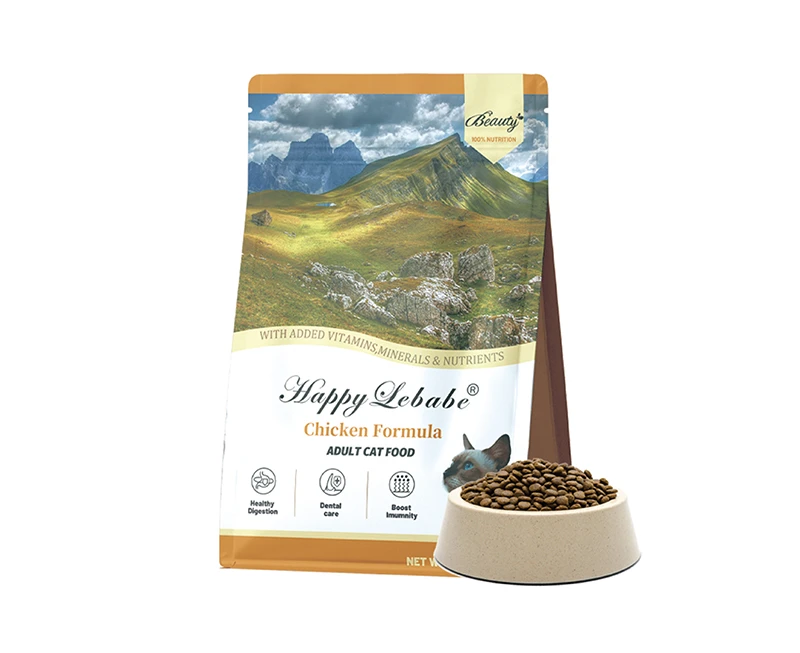
Purchasing managers, brand owners, veterinarians, product developers, and retail buyers often evaluate protein sources from different perspectives. A successful Private Label Cat Food project must satisfy all of them before the first production order is placed.
Protein selection should begin with the intended consumer and cat profile. A kitten formula, indoor adult formula, senior formula, sensitive digestion formula, and high-meat premium formula may require different protein strategies.
Write down the following requirements before contacting a supplier:
The ingredient named on the front of the package is not always the same as the protein source that contributes most to the finished product. A formula may contain fresh meat, meat meal, hydrolyzed protein, eggs, fish, legumes, or other ingredients that contribute to total crude protein.
Buyers should therefore evaluate both:
Chicken is one of the most practical starting points for a new cat food line. It is widely accepted by cats, available through established supply chains, and normally easier to formulate at a competitive price.
Turkey can provide a similar consumer message to chicken while offering a point of differentiation. It may be useful when a brand wants a poultry-based recipe with a different ingredient name or a more premium positioning.
Fish proteins such as salmon, tuna, whitefish, sardine, and pollock are often attractive because many cats find fish flavors highly palatable. Fish can also support omega-3 positioning when the final formula contains appropriate levels of EPA and DHA.
Beef, pork, and lamb can help a brand create a broader protein range. These proteins are useful when the product line needs variety, regional relevance, or a richer flavor profile.
These proteins should be evaluated for fat content, flavor intensity, raw material consistency, customer acceptance, and local labeling rules. A premium protein is not automatically better if it creates a product that is too expensive or difficult to source.
Rabbit, duck, venison, and other less common proteins can differentiate a product and may be appropriate for limited ingredient or novel protein concepts. However, they normally have higher purchasing costs, more limited supply, and greater risk of inconsistent availability.
Novel proteins are most appropriate when:
Start with a written product brief instead of asking a supplier for the cheapest available protein. The brief should define the commercial and technical boundaries of the project.
Create a shortlist of three to five candidate proteins. Include at least one mainstream option, one premium option, and one alternative that can protect the supply chain if the first choice becomes unavailable.
A practical shortlist may include:
Do not compare proteins by ingredient name alone. Ask each supplier or manufacturer for technical information that allows a fair comparison.
Request the following documents and data:
Use a scoring matrix instead of relying on personal preference. Give each factor a weight based on the product strategy, then score every protein consistently.
| Evaluation factor | Questions to ask |
|---|---|
| Nutritional value | Does the protein provide a strong amino acid profile and suitable digestibility? |
| Palatability | Will cats accept the flavor, aroma, and texture? |
| Cost | Can the protein meet the target factory cost and retail position? |
| Supply stability | Is the ingredient available in consistent quantities throughout the year? |
| Processing suitability | Will it perform well in extrusion, cooking, drying, or canning? |
| Quality risk | Are there risks related to oxidation, contamination, allergens, or variation? |
| Marketing value | Can the protein support a clear and compliant product message? |
| Regulatory fit | Can the ingredient and claims be legally used in the target market? |
A protein that looks attractive on paper may fail during processing or palatability testing. Ask the manufacturer to prepare laboratory samples and, when possible, pilot batches using the proposed production process.
Evaluate the samples for:
The final formula must be assessed as a complete diet, not only as a protein ingredient. Confirm that it meets the required nutritional standards for the selected life stage and market.
Review:
Once the formula passes testing, approve the protein through a written specification and supply agreement. The agreement should define what happens if the raw material changes, becomes unavailable, or fails to meet the agreed standard.
Include:
A simple worksheet helps the purchasing group compare different suppliers and formulas using the same criteria. The worksheet should include the candidate protein, supplier, origin, price, minimum order quantity, lead time, nutritional data, test status, and approval decision.
Recommended spreadsheet columns include:
Raw material price is only one part of the total cost. Calculate the cost of the complete recipe, including processing, packaging, testing, freight, storage, and expected production loss.
The cost calculator should include:
Before approving packaging or advertising, confirm that the protein statement and related claims are permitted in the target market. Claims such as single protein, limited ingredient, high meat, natural, grain free, and sensitive digestion may require specific ingredient and formulation conditions.
The compliance checklist should cover:
Samples should be tested in stages rather than approved from one small package. A reliable plan normally includes an ingredient review, laboratory formula, pilot batch, shelf life check, and final production verification.
Seasonal availability can create price changes, delayed production, or sudden recipe substitutions. Ask the supplier how the protein is sourced during low-supply periods and whether the same specification can be maintained throughout the year.
Questions for the supplier include:
A lower-priced substitute may change the nutritional profile, allergen profile, flavor, or marketing claim. The manufacturer should not replace the agreed protein without written approval and supporting documents.
Require written notification for changes involving:
Traceability is especially important for animal proteins. A manufacturer should be able to trace the finished product back to the relevant ingredient batch and production date. This protects the brand during quality investigations and potential recalls.
Ask to review evidence of:
A mainstream formula usually needs broad cat acceptance, stable supply, and a cost structure that supports regular retail purchase. Chicken, turkey, or blended poultry proteins may be appropriate when the brand competes on value, availability, and everyday nutrition.
The purchasing group should prioritize:
A premium protein should provide more than a higher ingredient cost. It should support a complete product concept, such as a single animal protein recipe, a high palatability wet food, a sustainable fish formula, or a limited ingredient diet.
Premium positioning is stronger when the brand can explain:
Many purchasing groups need a protein architecture for an entire product line. A planned range can share packaging, manufacturing processes, and supply resources while giving customers meaningful choices.
One possible structure is:
Each formula should have a distinct purpose. Adding multiple proteins without a clear reason can make the range confusing and increase purchasing complexity.
A cat may taste a new food once but reject it at the next meal. Palatability testing should therefore consider first choice, total consumption, repeat acceptance, and feeding behavior over an appropriate period.
Review:
Different proteins have different quality risks. Fish may require additional control for oxidation and heavy metals. Poultry may require strong Salmonella control. High-fat ingredients may require additional antioxidant and shelf life monitoring.
Discuss suitable testing with the manufacturer and laboratory. Depending on the protein and market, testing may include:
The protein can affect the product's odor, texture, nutrient stability, and oxidation rate. Shelf life testing should cover the unopened package and, where relevant, the product after opening.
Monitor:
The least expensive protein may create higher costs through poor palatability, lower yield, extra processing, customer complaints, or unstable supply. Compare the total cost of the finished product and the commercial risk, not only the price per kilogram of raw material.
Crude protein does not fully describe amino acid balance, digestibility, freshness, or species origin. A formula can show a high crude protein number while relying on ingredients that do not provide the desired nutritional or marketing value.
Claims should match the actual ingredient composition and local regulations. If a formula is promoted as a single animal protein product, review every ingredient, processing aid, flavor, fat, and supplement for potential contribution from another animal species.
Fresh meat contains substantial water, while meat meal is more concentrated. Comparing them directly by inclusion percentage can create a misleading impression of the final protein contribution. The formula should be evaluated on a dry matter and finished nutrient basis.
Laboratory samples may not behave like commercial production. Extrusion pressure, cooking time, drying conditions, filling temperature, and packaging can change the final result. A pilot batch helps identify problems before a large order is manufactured.
A private label brand can lose sales if its main protein becomes unavailable. Qualify a second source or an alternative formula before launch, especially for fish, novel proteins, and ingredients with seasonal supply.
Even a change within the same species can affect flavor, fat level, moisture, texture, and shelf life. Any material change should trigger a documented review and, when necessary, new palatability, nutritional, and stability testing.
The best protein for Private Label Cat Food is not simply the most expensive or the highest in crude protein. It is the protein that meets the cat's nutritional needs, delivers reliable palatability, fits the manufacturing process, supports the brand position, remains available at a workable cost, and can be documented from source to finished package.
By using a structured comparison, complete testing plan, supply risk review, and written approval process, purchasing groups can reduce costly reformulations and launch a more dependable product. Xinji Biotechnology can support brands that need practical protein evaluation, formula development, quality documentation, and scalable Private Label Cat Food manufacturing.
 Related News

Oct. 16, 2026
Which Pet Food Format Fits Retail, E-commerce, and Subscription Sales?
Choosing the right product format can determine whether a pet food line succeeds on store shelves, survives parcel delivery, or earns repeat subscription orders. In this guide, we at Xinji Biotechnology explain how to match Dry Pet Food, wet food, freeze-dried products, and treats with each sales channel. You will receive a practical step-by-step method for selecting packaging, controlling
View More
Oct. 15, 2026
Private Label vs Custom Pet Food: Key Differences for New Brands
A Private Label Pet Food Manufacturer can help a new brand enter the market quickly, but private label is not always the best choice for every product strategy. Custom pet food may provide stronger differentiation, while private label usually offers faster development, lower initial risk, and simpler purchasing. New founders need to compare more than the product price before choosing a
View More
Oct. 15, 2026
How to Avoid Confusing Treats With Complete and Balanced Pet Food
Many pet owners buy attractive dog treats or cat snacks and assume they can replace a daily meal. The safer approach is to check the label for a nutritional adequacy statement, compare calories, and use treats as a controlled supplement. This guide explains how to tell if pet food is complete and balanced, how many treats should a dog eat, and can treats replace pet food in real household
View More
Oct. 15, 2026
Choosing Protein Sources for a Private Label Cat Food Line
Choosing the right protein source is one of the most important decisions when developing Private Label Cat Food. The protein affects nutritional value, digestibility, palatability, product cost, supply stability, claims, and the way customers perceive the brand.
View More
Oct. 12, 2026
How Should Buyers Set Pet Food Batch Acceptance Criteria?
For pet food importers and private label brands, batch acceptance criteria should be agreed upon before production, covering product specifications, sampling methods, laboratory testing, traceability, and procedures for handling nonconforming goods.
View More
Oct. 10, 2026
Tablets vs. Powders: Which Pet Supplement Format Should Buyers Choose?
For pet brands and distributors choosing a private label supplement, the appropriate format depends on the intended use, active ingredients, target animal, dose size, stability requirements, and customer preferences.
View More
Oct. 09, 2026
How Should Buyers Verify Pet Treat Shelf Life?
For pet treat importers and private label brands, shelf life should be established through product-specific stability evidence, suitable packaging, and defined quality acceptance criteria rather than a supplier's standard date declaration alone.
View More
Oct. 08, 2026
What Specs Should Buyers Set for Private Label Dog Food?
For brands sourcing private label dog food, the right specifications depend on the target dog's life stage, feeding habits, distribution channel, and storage conditions. Before placing an order, buyers should define kibble diameter, moisture limits, guaranteed nutritional analysis, package weight, and shelf-life requirements in a written product specification.
View More
Oct. 12, 2026
Packaging Choices That Create a Consistent Pet Brand Portfolio
Private Label Pet Products often lose shelf impact when every pouch, jar, and carton uses a different color, logo position, or information order. A clear packaging system can help a growing pet brand look unified across food, treats, supplements, and accessories while still making each product easy to recognize. This guide explains how to build consistent packaging for private label pet products,
View More
Oct. 09, 2026
How Intellectual Property Differs in OEM and ODM Partnerships
When purchasing teams source Private Label Pet Products, the lowest quotation is rarely the only concern. Buyers must also determine who owns the product design, technical drawings, formulas, packaging, tooling, test data, trademarks, and improvements created during development. The answer is different in an OEM partnership than in an ODM partnership.
View MoreRelated Product
The company adheres to the policy of "quality, innovation" and the purpose of "reputation". On the basis of mutual benefit, we are willing to sincerely cooperate with people from all walks of life at home and abroad, and strive to seek greater win-win development!


