Product Classification
 Cat Food
Xinji Biotechnology is a professional private label cat food manufacturer in China, providing dry cat food manufacturing, wholesale supply, OEM/ODM and customized formulation services for pet brands, importers, distributors, retailers and e-commerce businesses.
With more than 20 years of experience in animal nutrition, we offer existing cat food formulas and customized product development for different life stages, protein directions, nutritional requirements and market positions. Our services cover product selection, formula adjustment, kibble customization, private label packaging, sample evaluation, quality inspection and export coordination.
Whether you are launching a new cat food brand or expanding an established product range, we can discuss suitable manufacturing options according to your target market, order quantity and commercial requirements.
Request a Wholesale Cat Food Quote | Explore Custom Pet Food Manufacturing
Our current cat food range includes dry kibble for kittens and adult cats, with chicken-oriented and seafood-oriented formula options. Buyers can select existing products or discuss customization based on life stage, nutritional specifications, kibble size, packaging and target price.
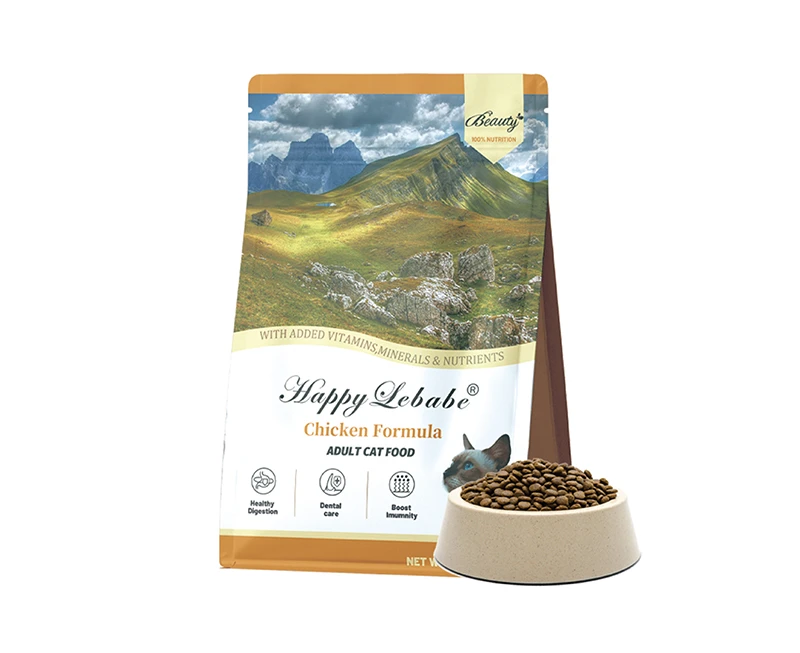
Our chicken formula adult cat food is designed for adult cat product ranges serving pet stores, wholesalers, distributors and private label brands. The current formula includes chicken, beef, salmon and other ingredients, together with vitamins, minerals and taurine.
View Chicken Formula Cat Food for Adult Cats
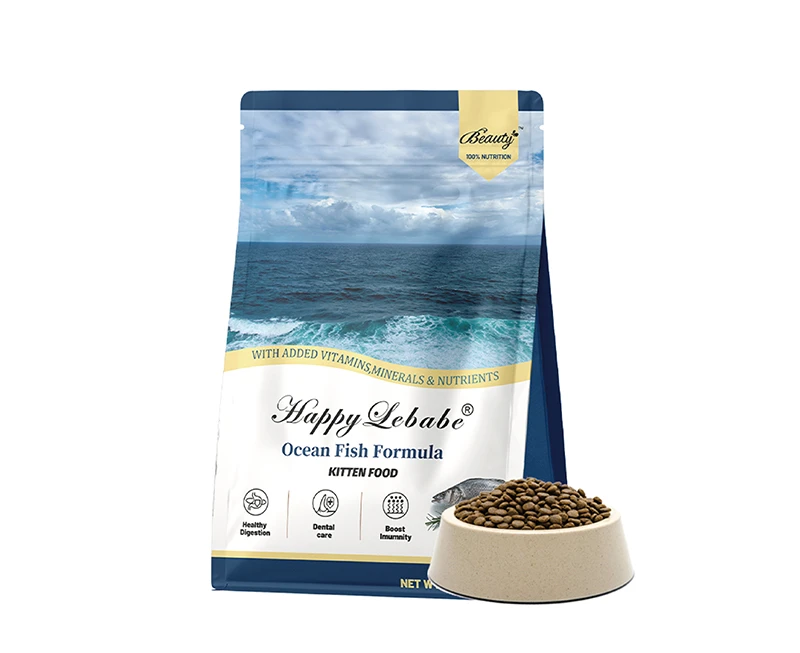
Our deep-sea fish formula kitten food provides a life-stage-specific product option for brands developing kitten food ranges. The existing formula includes chicken, salmon and other ingredients, with nutritional specifications intended for the kitten product category.
View Deep-Sea Fish Formula Cat Food for Kittens
For brands seeking stronger product differentiation, we support discussions about customized dry cat food based on ingredients, nutritional specifications, life stage, product positioning and production feasibility.
Final ingredients, nutritional values and product claims must be confirmed according to the approved formula and destination-market requirements.
Different sales channels require different combinations of product specifications, ingredients, packaging and price. We help buyers discuss cat food product positioning according to their target customers and distribution strategies.
Economy cat food is suitable for price-sensitive markets, high-volume wholesale programs and regional distributors.
Mainstream cat food is suitable for supermarkets, general pet stores, regional distributors and online retailers looking for a balance between product positioning, palatability and commercial pricing.
Premium private label cat food can focus on differentiated ingredients, protein positioning, nutritional specifications and packaging presentation.
Cat food formulation requires attention to feline nutritional requirements, ingredient selection, palatability and life-stage positioning. We support product development discussions based on the intended cat population and commercial requirements.
Protein sources influence product positioning, ingredient cost and consumer preferences. Buyers can discuss chicken, fish, salmon and multi-protein formula directions, with nutritional specifications confirmed for the finished product.
Taurine is an important nutritional consideration in cat food formulation. Calcium, phosphorus and other mineral specifications should also be reviewed according to the intended life stage and complete nutritional profile.
Cats can be selective about aroma, texture and kibble characteristics. Formula ingredients, processing and product structure can affect feeding acceptance and digestive outcomes. Buyers can discuss palatability and digestibility-focused requirements during product development and sample evaluation.
Depending on the formula, nutritional positioning may include appropriate fatty acids, vitamins and other nutrients associated with maintaining normal skin and coat condition. Specific claims should be supported by the product composition and applicable regulations.
Kitten and adult cat food require different nutritional positioning. Development discussions may cover energy requirements, protein and fat specifications, mineral balance, kibble dimensions and feeding information.
Kibble size, shape, texture and appearance influence product presentation and feeding suitability. We support customization discussions according to the target life stage, formula, production feasibility and order quantity.
For a customized kibble project, please provide the target life stage, preferred dimensions, reference images, desired texture, package size and estimated order quantity. Custom shapes or additional development may require a higher MOQ and longer preparation time.
As a private label cat food manufacturer, we support businesses that want to launch or expand their own branded cat food products without establishing an independent manufacturing facility.
Existing formulas are suitable for businesses that want to simplify product development and shorten their launch schedule. Buyers can discuss product availability, package sizes, brand artwork and labeling requirements.
For brands seeking additional differentiation, existing formulas may be reviewed for feasible adjustments to protein direction, nutritional specifications, kibble dimensions, palatability and packaging.
Custom development is suitable for buyers with a defined product brief and target market. Discussions can include ingredient structure, protein and fat targets, mineral specifications, taurine levels, functional ingredients and grain-inclusive or grain-free positioning.
Packaging options and customization levels depend on the product, packaging equipment, order quantity and destination-market requirements.
Learn More About Custom Pet Food OEM/ODM Services
Our wholesale cat food manufacturing services support businesses that need factory-direct supply, private label production and repeat-order planning.
For an accurate quotation, please provide your destination country, target life stage, preferred protein direction, formula requirements, package size and estimated order quantity.
Consistent cat food quality depends on raw material control, formula accuracy, production monitoring and finished-product inspection. Xinji uses digital production management to support standardized workflows, production visibility and batch traceability.
Incoming ingredients are reviewed against relevant purchasing and product specifications before entering production.
Approved formula information and production instructions are confirmed before manufacturing. Processing parameters are monitored according to the product and production requirements.
Finished products can be evaluated against agreed specifications, including relevant nutritional and physical parameters.
Depending on the product and order requirements, available documents may include product specifications, ingredient information, guaranteed analysis, Certificate of Analysis (COA) where applicable, batch information and export documents.
Xinji Biotechnology originated from a feed company established in 2002. Our experience in animal nutrition supports formula selection and product development for different commercial requirements.
Our production base covers approximately 17,300 square metres, with a total construction area of about 12,600 square metres. Digital systems support standardized workflows and production traceability.
Buyers can start with existing chicken adult cat food or fish formula kitten food and discuss packaging requirements for their target market.
We support discussions about protein direction, nutritional specifications, kibble dimensions, palatability and packaging according to manufacturing feasibility.
Raw material controls, production records and finished-product inspection support product consistency and repeat-order management.
We coordinate product specifications, private label packaging, production planning and relevant shipment documentation according to project requirements.
Yes. Xinji Biotechnology provides factory-direct cat food manufacturing through OEM, ODM, private label and wholesale supply programs.
Our current range includes dry extruded kibble for kittens and adult cats, with chicken-oriented and seafood-oriented formula options.
Yes. Existing formulas can help buyers shorten the development process. Product availability, packaging and order conditions should be confirmed before ordering.
Yes. Custom development can cover protein direction, ingredient structure, nutritional specifications, taurine, mineral balance, kibble and packaging, subject to production feasibility.
Yes. We offer a deep-sea fish formula kitten food product and can discuss kitten-specific nutritional positioning, kibble dimensions and feeding information.
Kibble diameter, thickness, shape, texture and appearance can be discussed according to production feasibility and order quantity.
Grain-free and high-protein concepts can be discussed according to ingredient availability, formulation feasibility, nutritional specifications and destination-market requirements.
MOQ depends on the formula, packaging method, customization level and order quantity. Contact us with your requirements to confirm the applicable minimum order conditions.
Sample arrangements can be discussed for evaluating formula, kibble size, appearance and palatability. Sample availability, costs and shipping conditions should be confirmed in advance.
Depending on the product and order requirements, documentation may include product specifications, ingredient information, guaranteed analysis, COA where applicable and batch information.
We support international B2B projects. Ingredients, nutritional claims, labels and import documentation must be reviewed according to the destination country's requirements before order approval.
Whether you need adult chicken cat food, fish formula kitten food, customized dry cat kibble or a complete private label cat food range, Xinji supports your project from product selection to production and export coordination.
Tell us your target market, life stage, preferred formula, nutritional requirements, package size and estimated order volume. Our team will review your requirements and discuss suitable existing-formula or customized manufacturing options.

The company adheres to the policy of "quality, innovation" and the purpose of "reputation". On the basis of mutual benefit, we are willing to sincerely cooperate with people from all walks of life at home and abroad, and strive to seek greater win-win development!